
Spiders in Tennessee: Brown Recluses, Black Widows and the Harmless Ones


Tennessee has two spiders worth knowing: the brown recluse and the black widow. Unlike the Carolinas, where recluses are rare, Tennessee is recluse country. University of Tennessee Extension says they’re found in every county except possibly a few in the far east, and they’re far more common in the western half of the state. Nearly every other spider you’ll find, from wolf spiders to the Joro spiders now spreading through East Tennessee, is harmless.
Brown recluses: the spider Tennessee is known for
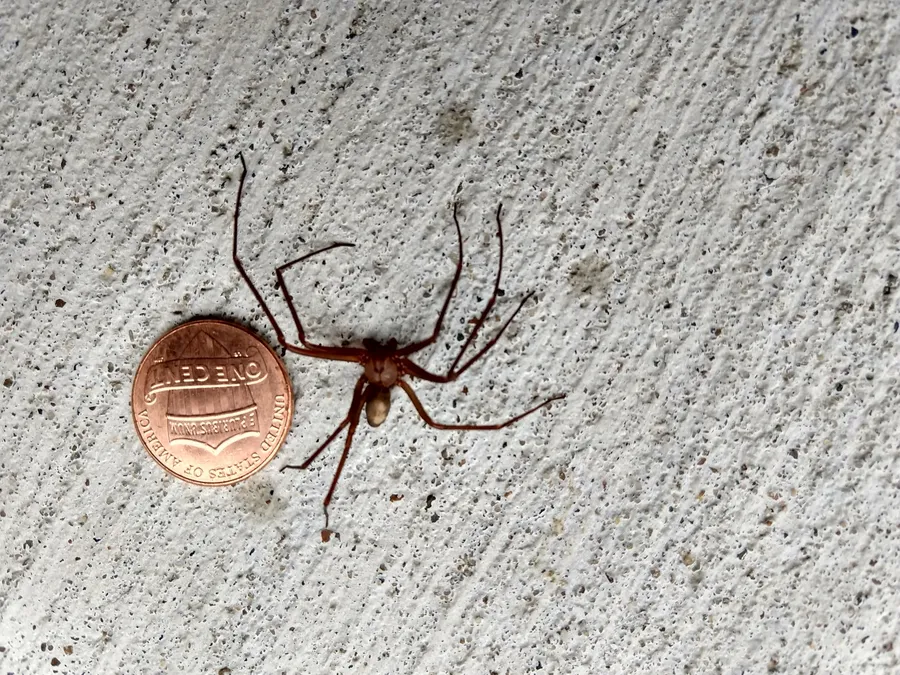
UT Extension’s brown recluse guide calls it “one of the feared poisonous spiders occurring in Tennessee.” It’s also a shy spider that bites only when it’s pressed against skin. So a Memphis or Jackson homeowner is more likely to share a house with recluses than someone in Johnson City, but anyone in the state can find one.
How to recognize one
| Feature | What to look for |
|---|---|
| Size | Body about ¼ to ½ inch long, with long, thin legs |
| Color | Brown |
| The violin mark | A darker, violin-shaped mark behind the head. It varies, and other spiders can seem to have one |
| The eyes | Six eyes in three pairs, arranged in a half circle. Most spiders have eight. This is the best way to tell |
Descriptions are from UT Extension. If you’re not sure, trap the spider in a jar or snap a clear photo so it can be identified.
Where they hide in a Tennessee home
Recluses like dark, undisturbed places: closets, garages, basements, attics and cupboards. Inside those spaces they tuck into cardboard boxes, behind picture frames, under furniture and in stored clothing and shoes. UT says most bites happen when someone puts on clothing that’s been sitting unused or rolls onto a spider in bed, and most happen between March and October.
They’re also hard to starve out. UT notes recluses can live for months without food or water, so cleaning up the insects they eat doesn’t get rid of them on its own.
Avoiding bites
UT Extension’s advice for homes with recluses:
- Store clothing and shoes in sealed plastic bags or bins, not open boxes.
- Shake out clothes, shoes and gloves that have been stored, before you put them on.
- Move beds away from walls, take off bed skirts, keep bedspreads off the floor and check the bedding before getting in.
- Put sticky traps along walls, in closets, under sinks and under bedposts. They catch recluses and show where they’re active.
- Clear storage areas of cardboard and clutter, where recluses hide.
If you’re bitten: a recluse bite is often painless at first. UT says it can turn red and blister over the next several hours, and in some cases the skin breaks down into a sore that heals slowly. Ice the bite, keep it raised and see a doctor, especially if the area is spreading or not healing. NC State entomologists note that many wounds blamed on recluses turn out to be something else, including MRSA skin infections, which is one more reason to have it looked at.
Black widows
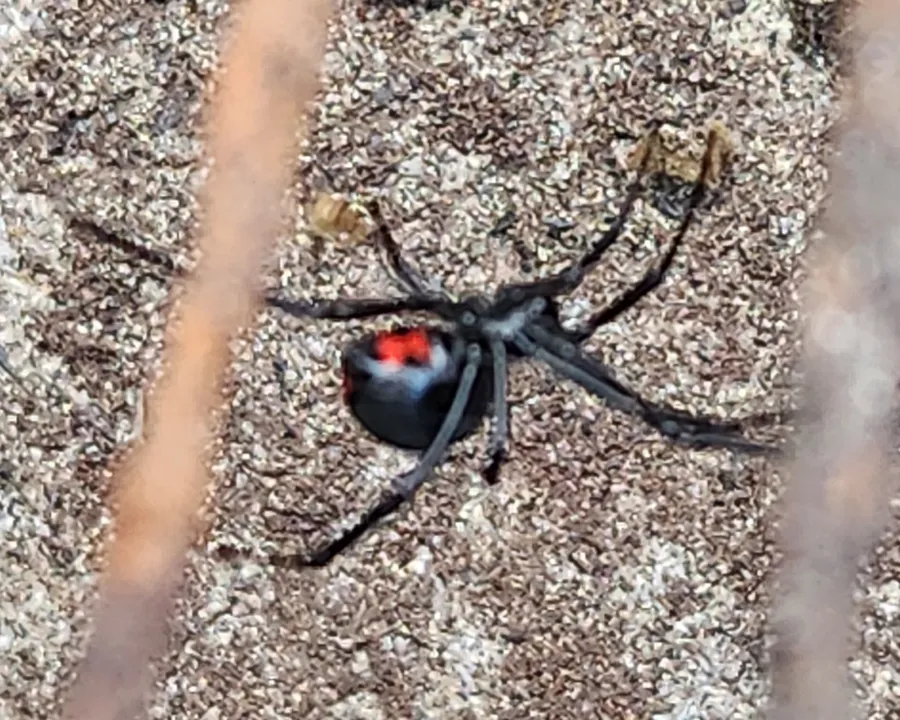
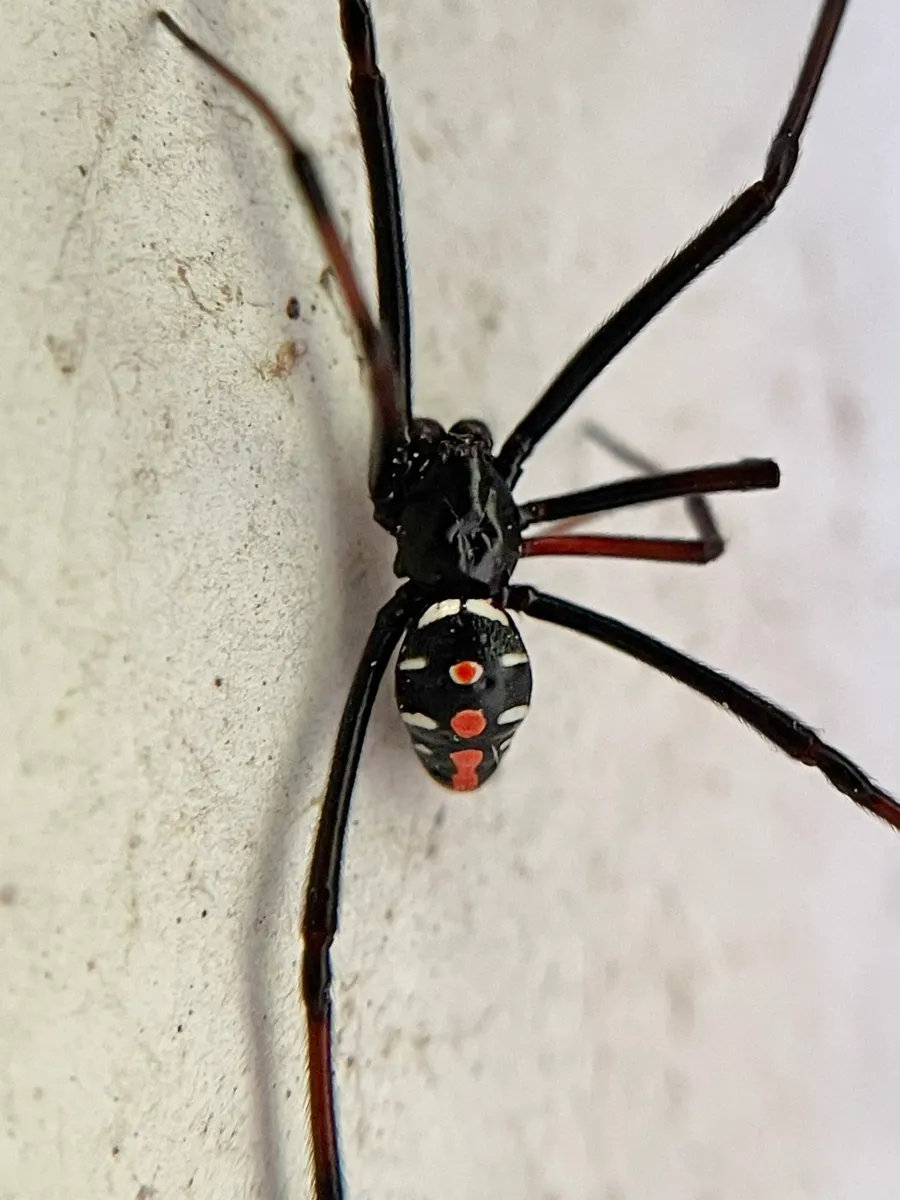
Tennessee has both the southern and the northern black widow, and UT Extension’s black widow guide says the southern is the more common of the two. They’re very numerous, but reported bites are rare. A widow will usually try to get away rather than bite.
| Southern black widow | Northern black widow | |
|---|---|---|
| Look | Glossy black, red or orange hourglass on the underside | Glossy black, the hourglass looks split in the middle |
| Where | Crawl spaces, woodpiles, under boards and furniture, inside boxes, sheds and barns, seldom-worn shoes | Females often build their webs in tree branches |
Adult females reach about 1½ inches with their legs spread, and only they have the full, bright markings. Young widows vary in color, and the hourglass may be white or missing. Males are about half the size and aren’t known to bite.
According to NC State Extension, black widow venom affects the nervous system, so treat any bite seriously and get medical care. Most bites happen when a hand reaches into a dark spot, so gloves for woodpiles, sheds and crawl spaces prevent most of them.
Joro spiders in East Tennessee
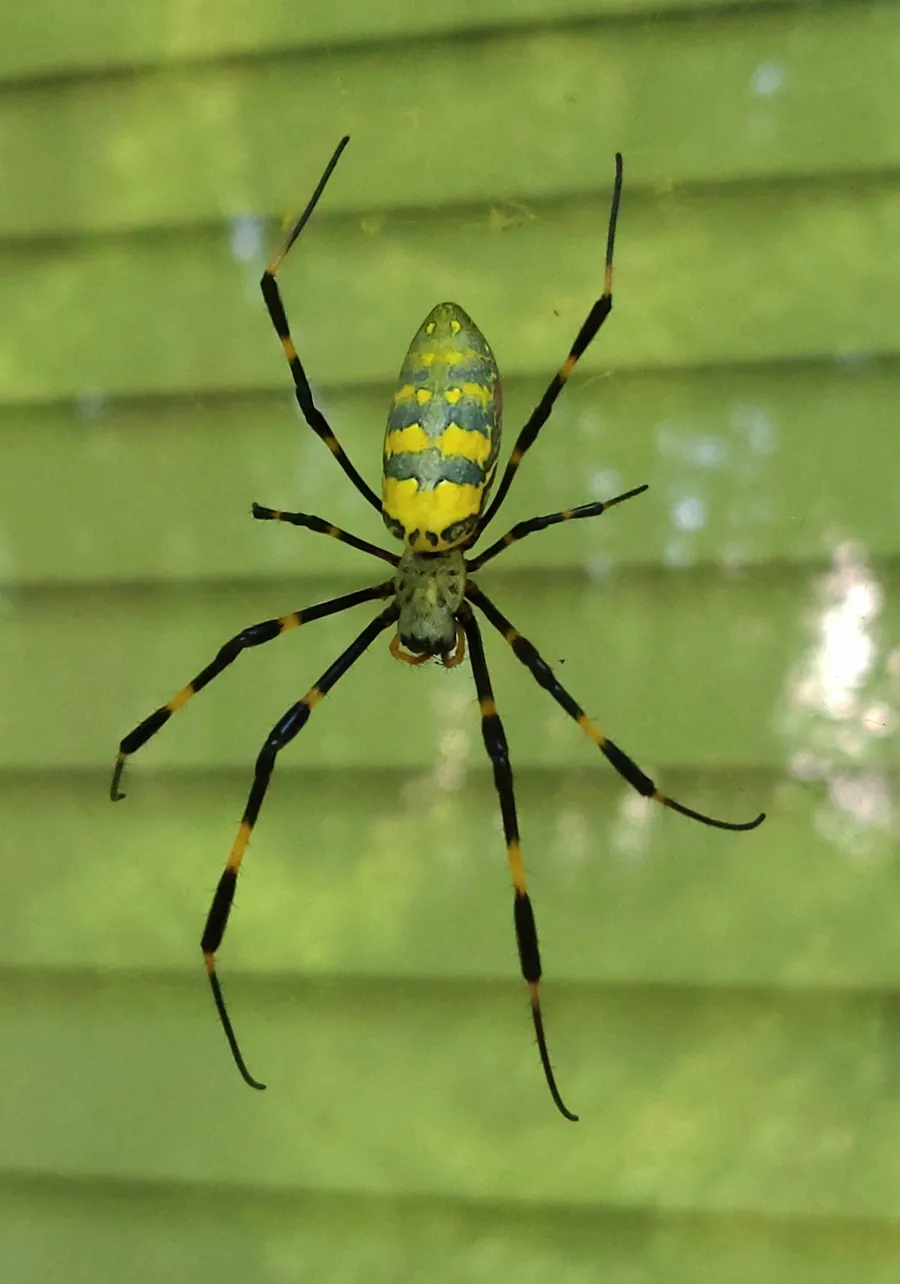
The Joro spider is an invasive orb-weaver from East Asia, first confirmed near Braselton, Georgia, in 2014. By 2021, UT Extension entomologist Karen Vail reported the first Tennessee sightings near the Georgia line. This year it’s been spreading through Great Smoky Mountains National Park, so East Tennessee is where you’re most likely to see one.
Females are big and yellow with blue-black bands and a red patch underneath, and they spin golden webs that can stretch several feet across. UT says they’re not aggressive and shouldn’t be considered dangerous to people. Their webs even catch brown marmorated stink bugs. You can knock a web down with a broom or rake. University of Tennessee researchers are mapping the spread, so if you see one, you can report it on iNaturalist or by email to UTKJoroProject@utk.edu.
Big, fast and harmless
Garden spiders
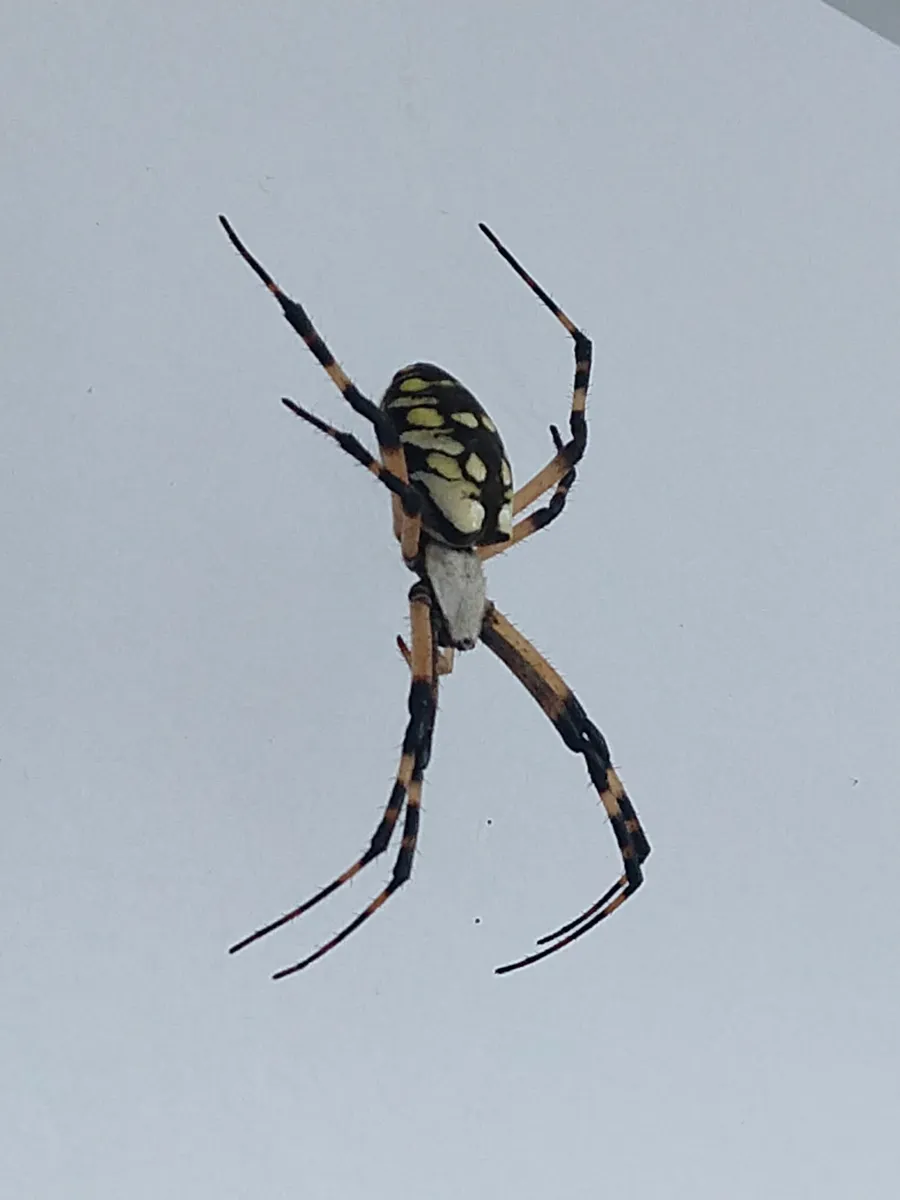
The big yellow-and-black spider in the middle of a round web in the flower bed is a yellow garden spider. Clemson Extension’s guide to big yellow spiders notes the thick zigzag band of silk down the middle of its web. It’s harmless. Leave it alone if it’s out of the way.
Wolf spiders
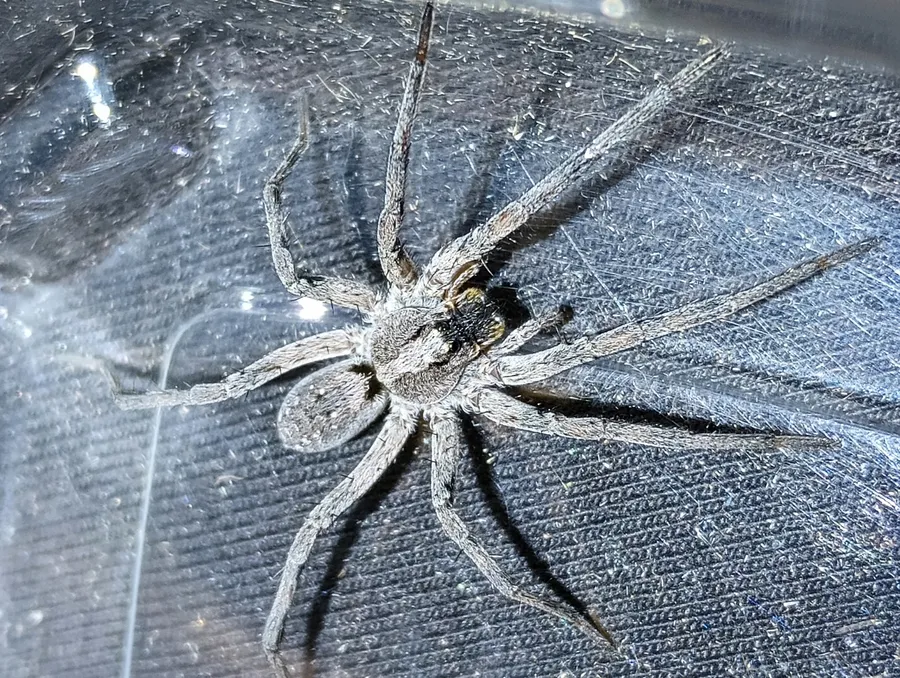
Wolf spiders are the fast, hairy, brown-and-gray spiders that run across the floor at night. They hunt instead of building webs. NC State Extension says they’re the spiders that most often wander into homes. They’re harmless to people and homes. Catch a stray one in a cup and put it outside.
Jumping, cellar and house spiders
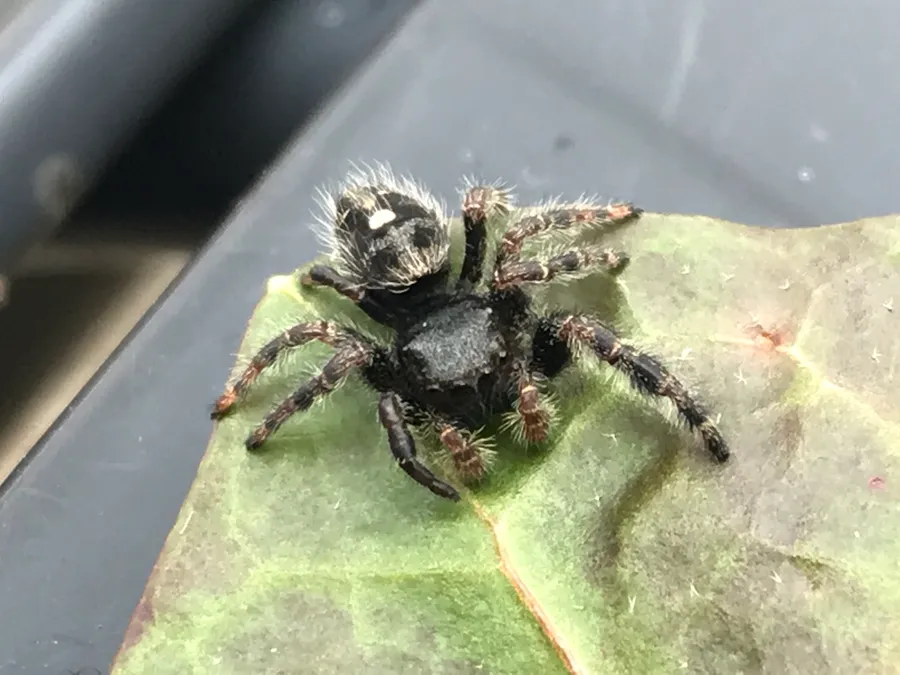
- Jumping spiders are small, compact and fuzzy, with two big front eyes. They hunt on windowsills and walls and are harmless.
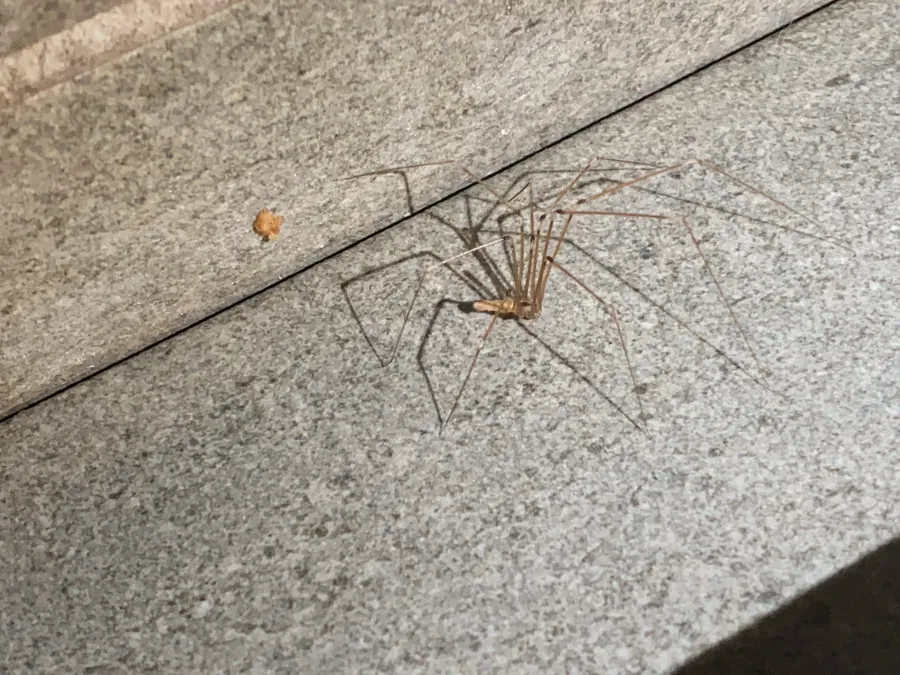
- Cellar spiders are the pale, long-legged spiders in the corners of basements, crawl spaces and garages. They’re harmless, but they leave a lot of web behind.
- Common house spiders build the tangled cobwebs in ceiling corners, behind furniture and in closets.
How to tell what you’re looking at
| What you see | Most likely |
|---|---|
| Plain brown spider with long thin legs in a closet, box or stored clothes | Possible brown recluse. Trap it or photograph it for identification |
| Shiny black spider low and out of sight: woodpile, crawl space, shed | Black widow (check the underside from a safe distance) |
| Huge yellow spider with blue-black bands in a golden web on the porch or eaves | Joro spider |
| Yellow-and-black spider in a round web with a zigzag down the middle | Yellow garden spider |
| Fast, hairy spider running across the floor, no web | Wolf spider |
| Small, fuzzy spider that jumps | Jumping spider |
| Pale, long-legged spider in a messy web in the basement or crawl space | Cellar spider |
Keeping spiders out of your home
| Do this | Helps with |
|---|---|
| Store clothes, shoes and keepsakes in sealed plastic bins, not cardboard | Brown recluses |
| Shake out stored clothes, shoes and gloves before wearing them | Brown recluses |
| Keep mulch and plantings about 18 inches back from the foundation | All spiders |
| Seal cracks, add door sweeps and screen vents | All spiders |
| Wear gloves for woodpiles, sheds, crawl spaces and stored boxes | Black widows and recluses |
| Switch porch lights to yellow bulbs, which draw fewer insects | Web-building spiders |
| Vacuum webs and egg sacs, then empty the vacuum outside | All spiders |
The mulch, sealing and storage tips are from UT Extension.
When to call
Call if you’re finding brown recluses or black widows in the house, if sticky traps keep catching recluses, or if webs come back no matter how often you clear them. For recluses, UT Extension puts it plainly: the best solution is to hire a professional pest control company.
Mack’s spider control service treats all common household spiders, including black widows and brown recluses. We remove webs and egg sacs, treat the eaves, foundation, doors, windows and crawl space where spiders hide and get in, and treat indoors where they’re active: corners, closets, basements and garages. Because the treatment also cuts down the insects spiders feed on, there’s less reason for them to stay. De-webbing and crawl space treatment are part of every year-round plan, and if spiders come back between visits, so do we, at no extra cost.
We serve homes across Tennessee, from Memphis and Jackson to Nashville, Chattanooga and Knoxville. Request a free estimate or call 864-235-9611.