
Wasp, Hornet & Bee Control Services
Yellow jackets in the ground, paper wasps under the eaves, hornets in the trees: we find the nest, treat it and remove it, often the same day you call.
Free, no-obligation estimate.
Signs you need wasp or hornet control
One wasp at a picnic is normal. A nest near the house is a problem.
-

Traffic in one spot
Wasps or yellow jackets flying in and out of the same place: a hole in the ground, a gap in the siding, a vent or the eaves.
-

Paper nests
Umbrella-shaped paper nests under eaves, porch ceilings, railings and play sets, or large, enclosed nests hanging in trees and shrubs.
-

Wasps indoors
Wasps turning up inside, especially near a ceiling, attic or window, can mean a nest in a wall void or the attic.
-

Stings and swarming
Aggressive insects near a door, deck or the mowing path. Yellow jackets defend their nest hard, and colonies are biggest in late summer.
What's included in wasp and hornet control
-

Nest location
We find the nest, including hidden ones in the ground, wall voids, attics and dense shrubs.
-

Nest treatment and removal
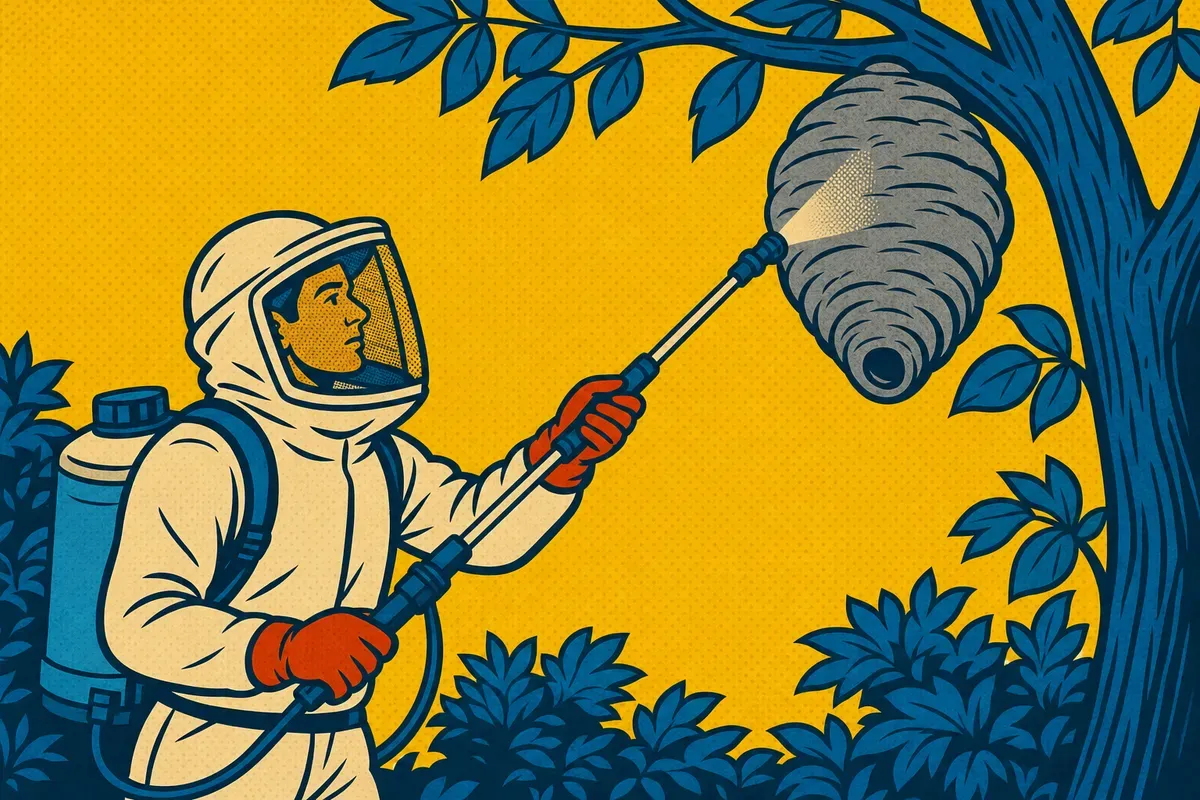
We treat the nest to kill the colony, then remove it where it can be reached safely.
-

Same-day service
We can usually treat a nest the same day you call, and we offer 24-hour emergency response.
-

The right gear
Our technicians have the protective gear and equipment to reach high and hidden nests safely.
-

Coverage on year-round plans
Every year-round plan includes stinging insect treatment within 10 feet of the home and up to 20 feet up.
-

Free re-treatment
If a treated nest becomes active again, we come back and re-treat at no extra cost.
Our wasp-crushing team
Since 1983, Mack Pest Solutions has protected homes and businesses from wasps, hornets and yellow jackets.
How our wasp and hornet treatment works
Different stinging insects build different nests, and each needs its own approach:
- Yellow jackets nest in the ground and inside wall voids, attics and other enclosed spaces, and a colony can reach thousands of workers by late summer.
- Paper wasps build open, umbrella-shaped nests under eaves, porch ceilings, railings and play sets.
- Hornets, including bald-faced hornets, build large, enclosed paper nests in trees and shrubs and on the sides of buildings.
- Mud daubers build tube-shaped nests out of mud and rarely sting.
Our technician finds the nest and treats it to kill the colony, including the queen and the young developing inside, then removes it where it can be reached safely. Nests in walls and in the ground are treated through the entrance the insects use. Treating the nest, not just spraying the wasps flying around it, is what stops the colony.
Honeybees are different. They're pollinators we'd rather see relocated than killed, so call us and we'll talk you through the options. Carpenter bees have their own carpenter bee treatment.
Dealing with stinging insects? Free, no-obligation estimate.
Here's what our customers say. 📣
-
“Shawn sprayed my apartment today. I live in Spartanburg and the wasps are TERRIBLE this time of…”
Ash Butler, Google review -
“Rose was absolutely amazing! She explained what needed to be done in terms I could understand! Thank…”
kim weindel, Google review -
“Five stars all around for this business!!! Tre was absolutely phenomenal and extremely thorough!…”
Lisa Moseley, Google review



What to expect from wasp and hornet control
Find the nest, treat it, remove it.
- Step 1
Nest inspection
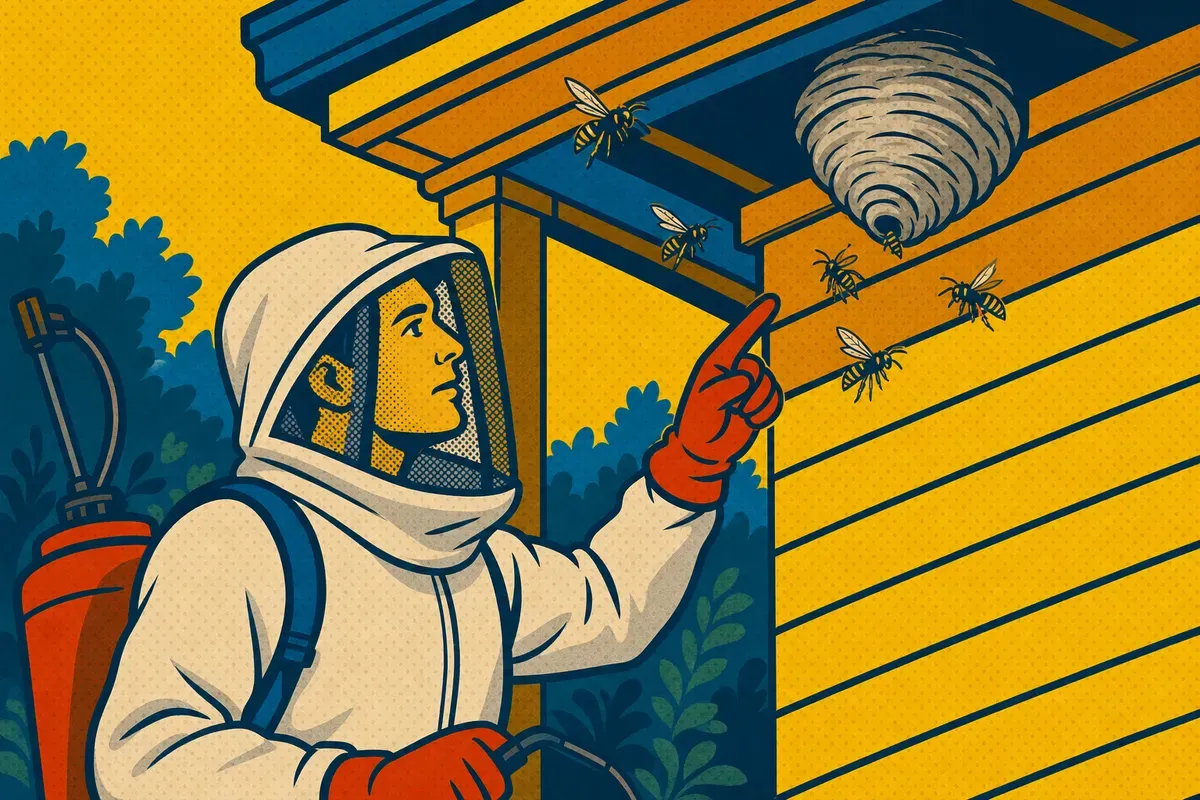
We identify the insect and locate the nest, checking the eaves, ground, wall voids, attic, sheds and trees around the home.
- Step 2
Treatment and removal
We treat the nest to kill the colony and remove it where it can be reached safely.
- Step 3
Follow-up
If activity picks back up, call us and we'll re-treat at no extra cost. On a year-round plan, stinging insects within 10 feet of the home and up to 20 feet up are covered.
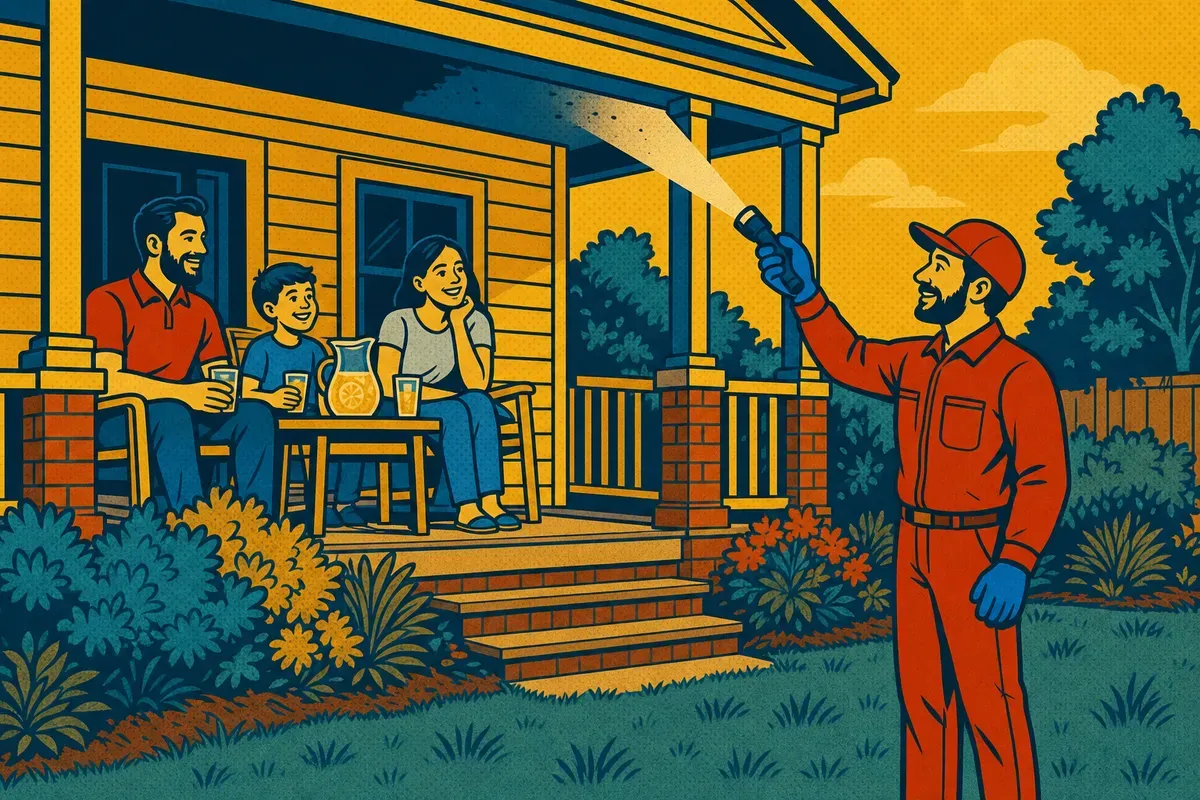
How to prepare for wasp nest removal
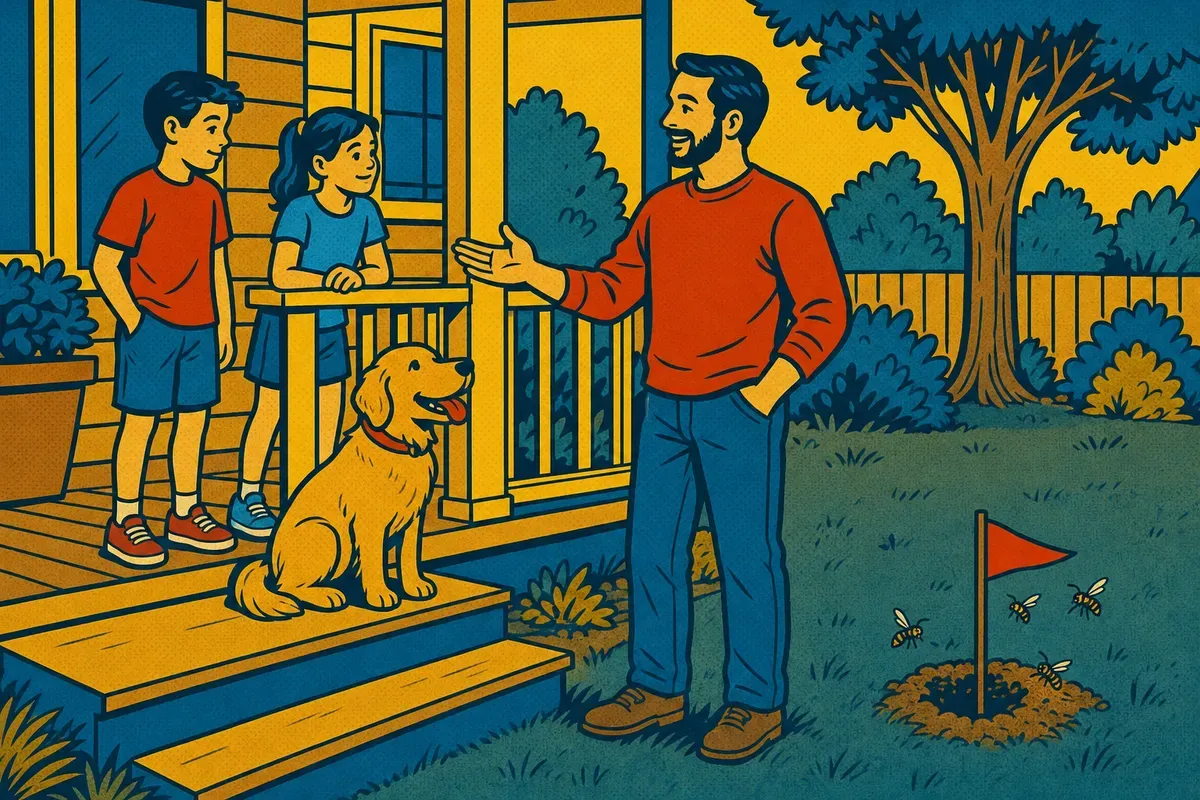
-
Keep everyone away
Keep people and pets clear of the nest, and don't mow or trim near a ground nest.
-
Don't spray or plug the nest
Store-bought sprays rarely reach the queen, and a blocked wall nest can send yellow jackets into the house.
-
Watch where they go
Note where the insects fly in and out, so we can find the nest quickly.
-
Tell us about allergies
If anyone is allergic to stings, tell us when you call. If someone has trouble breathing after a sting, call 911 first.
Learn More About Stinging Insects & Pest Control
Explore helpful articles, prevention tips, and seasonal advice from Mack Pest Solutions experts.
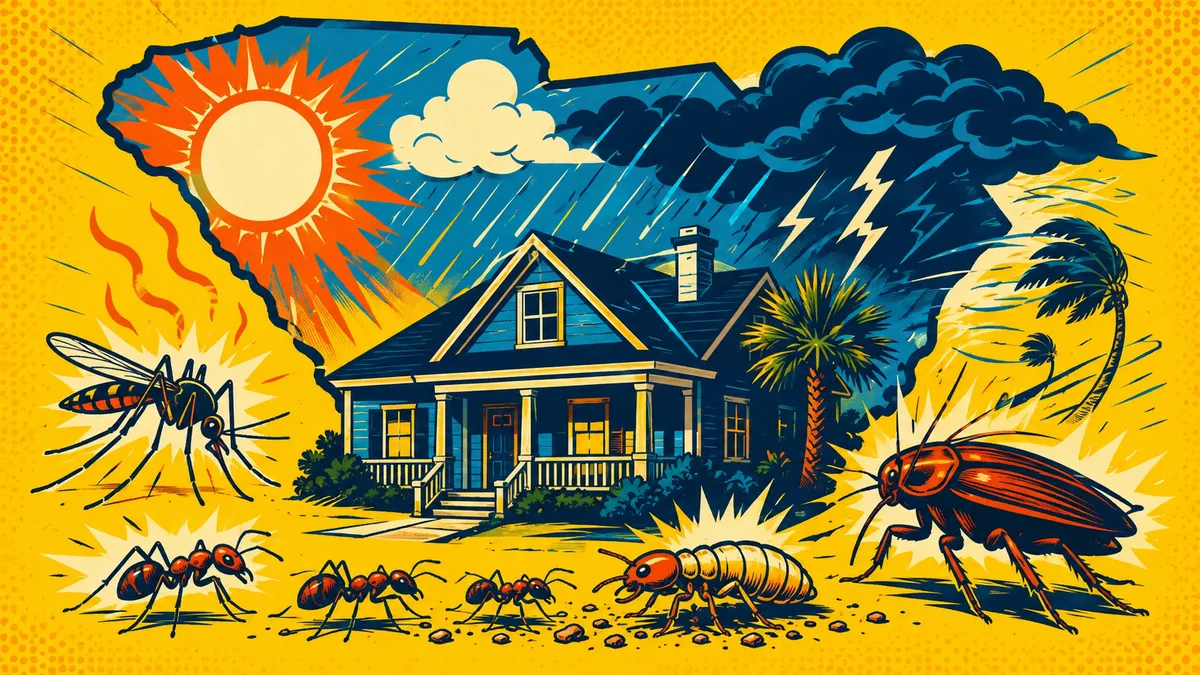
How Does South Carolina's Weather Influence Pest Behavior and Infestations?
Learn the influence of South Carolina's climate on pest infestations. Discover how weather and temperature shifts drive pest activity in your space.
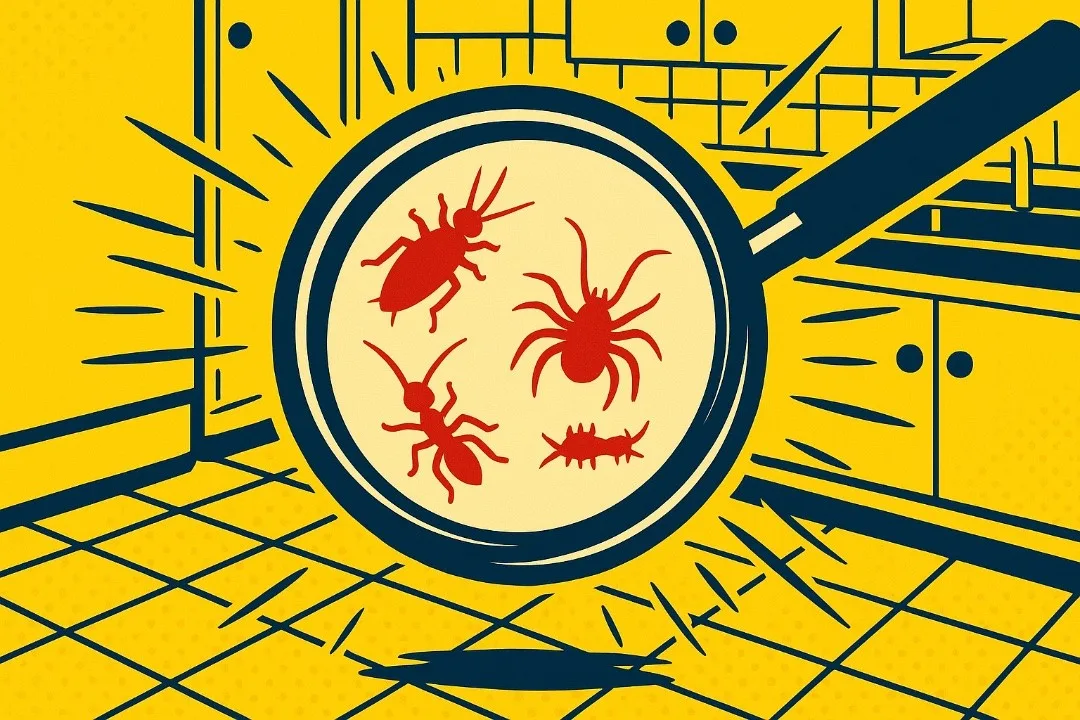
Recognizing and Handling Common Indoor Pests in South Carolina Homes
Explore South Carolina's common indoor pests and their impacts while learning how to identify and manage them. Invaders in your home aren't welcome!
Embracing Eco-Friendly Pest Control Innovations in South Carolina
South Carolina is embracing eco-friendly pest control due to increasing environmental consciousness. Discover the benefits of green pest management solutions.

Wasp, hornet and bee control questions
How soon can you remove a wasp or hornet nest?
We offer 24-hour emergency response and can usually treat a nest the same day you call.
Which stinging insects do you treat?
Paper wasps, yellow jackets, hornets including bald-faced hornets, and mud daubers. Carpenter bees need their own carpenter bee treatment, and honeybees are handled differently.
Do you remove honeybees?
Honeybees are pollinators we'd rather see relocated than killed, so they aren't covered under our stinging insect treatment. Call us and we'll talk you through the options.
Can I remove a wasp nest myself?
We don't recommend it. Disturbing a nest can bring out hundreds of defenders at once, and store-bought sprays often miss the queen, so the colony survives. Ground and wall nests are especially risky, and anyone allergic to stings should never try.
Are stinging insects covered by your pest control plans?
Yes. Every one of our year-round plans includes stinging insect treatment within 10 feet of the home and up to 20 feet up. Honeybees and carpenter bees aren't covered.
When are wasps and yellow jackets worst?
Late summer and early fall. Colonies start with a single queen in spring and grow all summer, so by August and September nests are at their biggest and the workers are at their most aggressive.
Will the wasps come back after you remove the nest?
Treating the nest kills the colony, so that nest won't rebuild. New queens can start new nests nearby in later seasons, though, and if a treated nest becomes active again, we'll re-treat at no additional cost.
Are your treatments safe for children and pets?
Our products are EPA-registered and applied by licensed technicians according to the label. Keep kids and pets off treated areas until they've dried, and your technician will tell you when it's okay to go back.
Regain Your Peace of Mind. Book Your Stinging Insect Service Today
Don’t let wasps and hornets take over your summer, contact Mack Pest Solutions for fast, effective, and guaranteed stinging insect control.
4.8 from 540+ Google reviews · Backed by our guarantee: if pests come back between visits, so do we, free.