
Spiders in South Carolina: Which Ones Are in Your House, and the Two That Matter

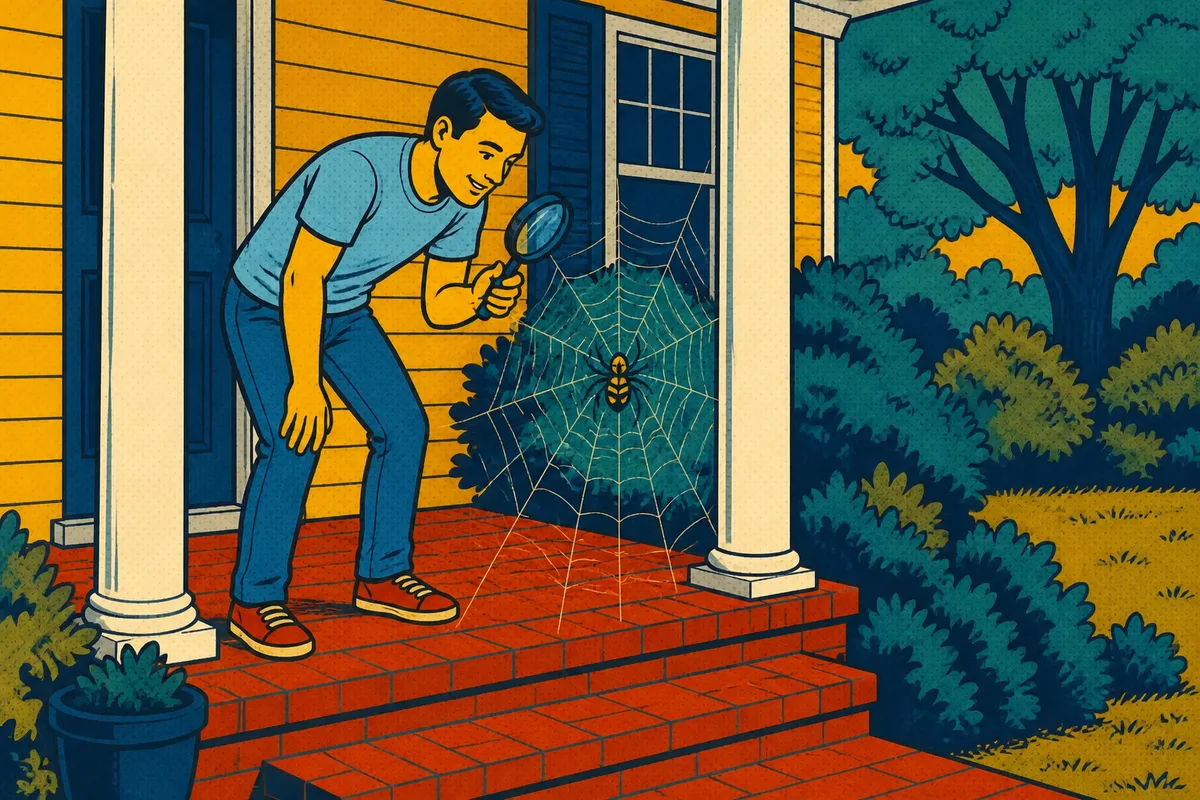
Most spiders you’ll find in a South Carolina home are harmless. The two worth taking seriously are the black widow, which lives across the whole state, and the brown recluse, which is far rarer here than most people think. Everything else, including the big yellow orb-weavers and the Joro spiders spreading out of the Upstate, is more of a nuisance than a danger.
This guide covers the spiders South Carolina homeowners actually run into, how to tell them apart, and when a spider problem is worth a call.
Why South Carolina homes see so many spiders
Spiders go where the food is. South Carolina’s long, warm season keeps insects active for most of the year, and that keeps spiders fed. Two times of year bring the most calls:
- Late summer into fall, when garden spiders and orb-weavers are full-grown and their webs stretch across porches, eaves and walkways.
- Fall into winter, when wandering spiders like wolf spiders move indoors as the weather cools.
Crawl spaces, garages, woodpiles and storage areas give them dark, sheltered places close to the ground. Those are the same places the most important species, the widows, prefer.
The two that matter
Black widows (southern, northern and brown)
South Carolina has three widow spiders, and Clemson Extension notes that all three can be found year-round.
| Spider | Where in SC | How to recognize the female |
|---|---|---|
| Southern black widow | Throughout the state | Shiny black, red hourglass on the underside |
| Northern black widow | Mainly the Piedmont and Upstate | Shiny black, two red spots on the underside instead of a full hourglass |
| Brown widow | Statewide, most common on the coast | Gray, tan or dark brown with a geometric pattern on top and an orange hourglass underneath |
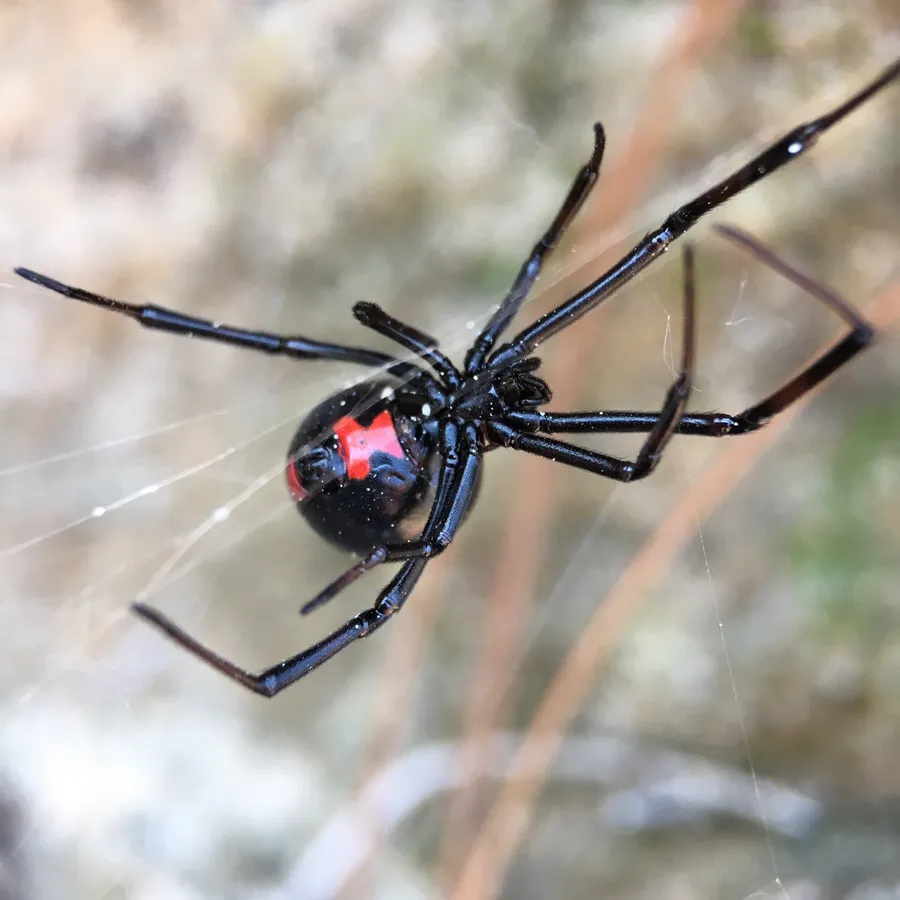
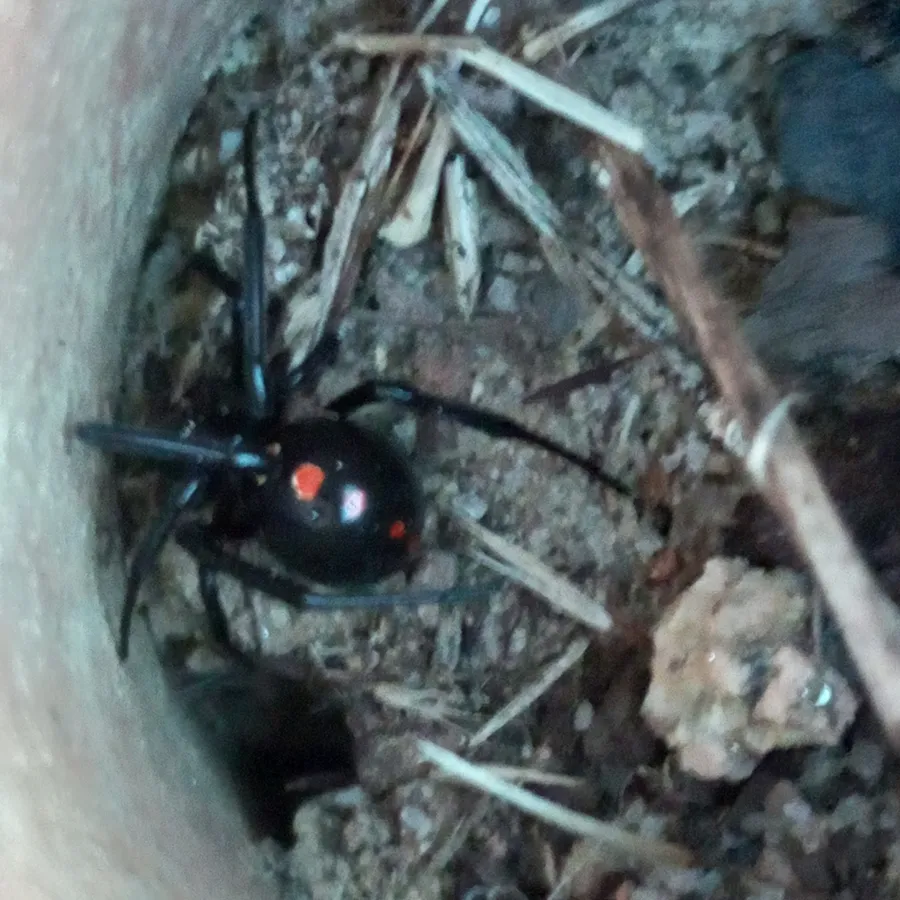
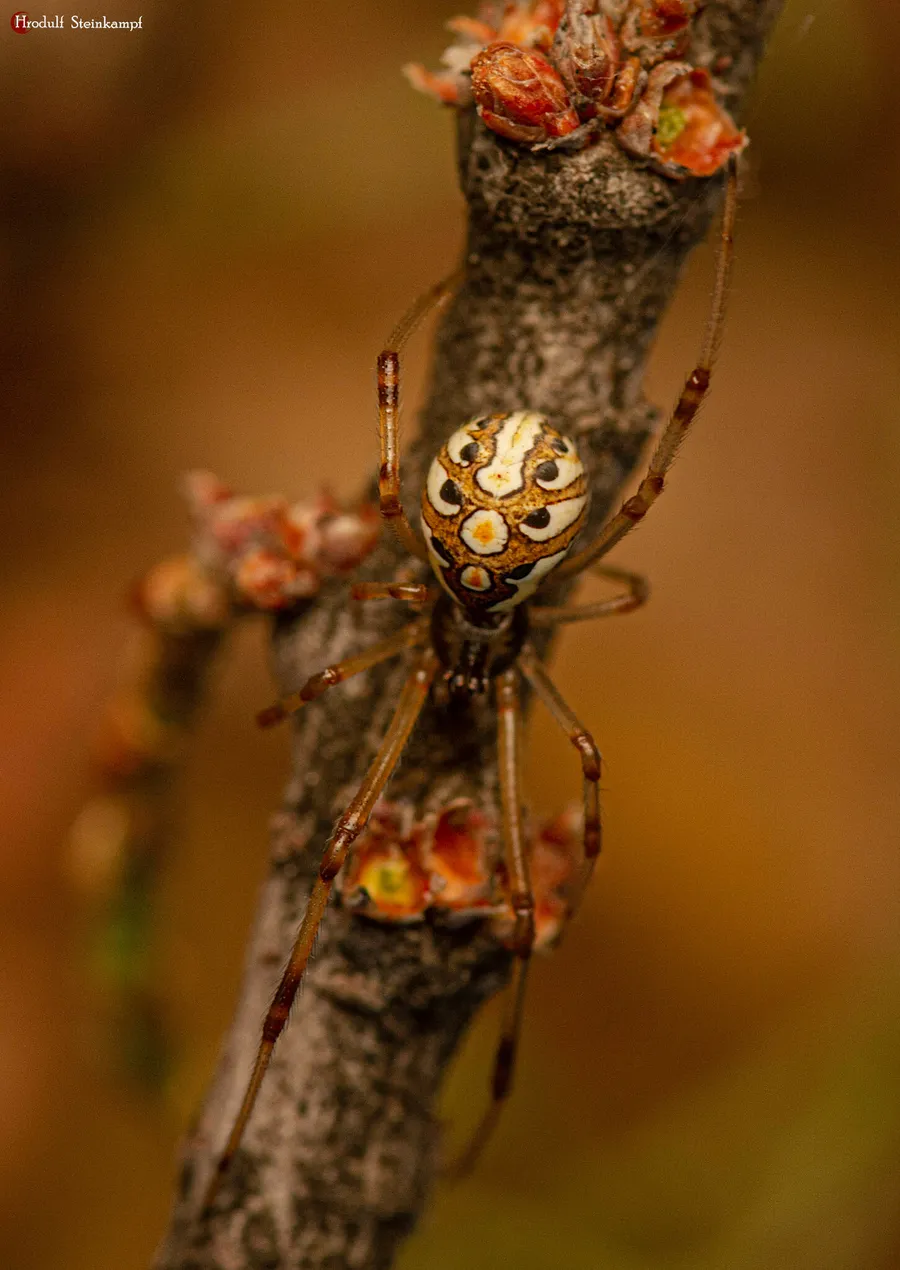
Females are the ones people notice. A southern black widow female can reach about 1½ inches in total length. Males are much smaller.
You’ll usually find widows outdoors in woodpiles, empty flowerpots, utility and irrigation boxes, and under outdoor furniture. Around the house, look in crawl spaces, basements, sheds and garages. Brown widow egg sacs are easy to spot: round, light tan and covered in small points, often tucked under railings or patio furniture. Black widow egg sacs are smoother, tan to gray, with a single small point.
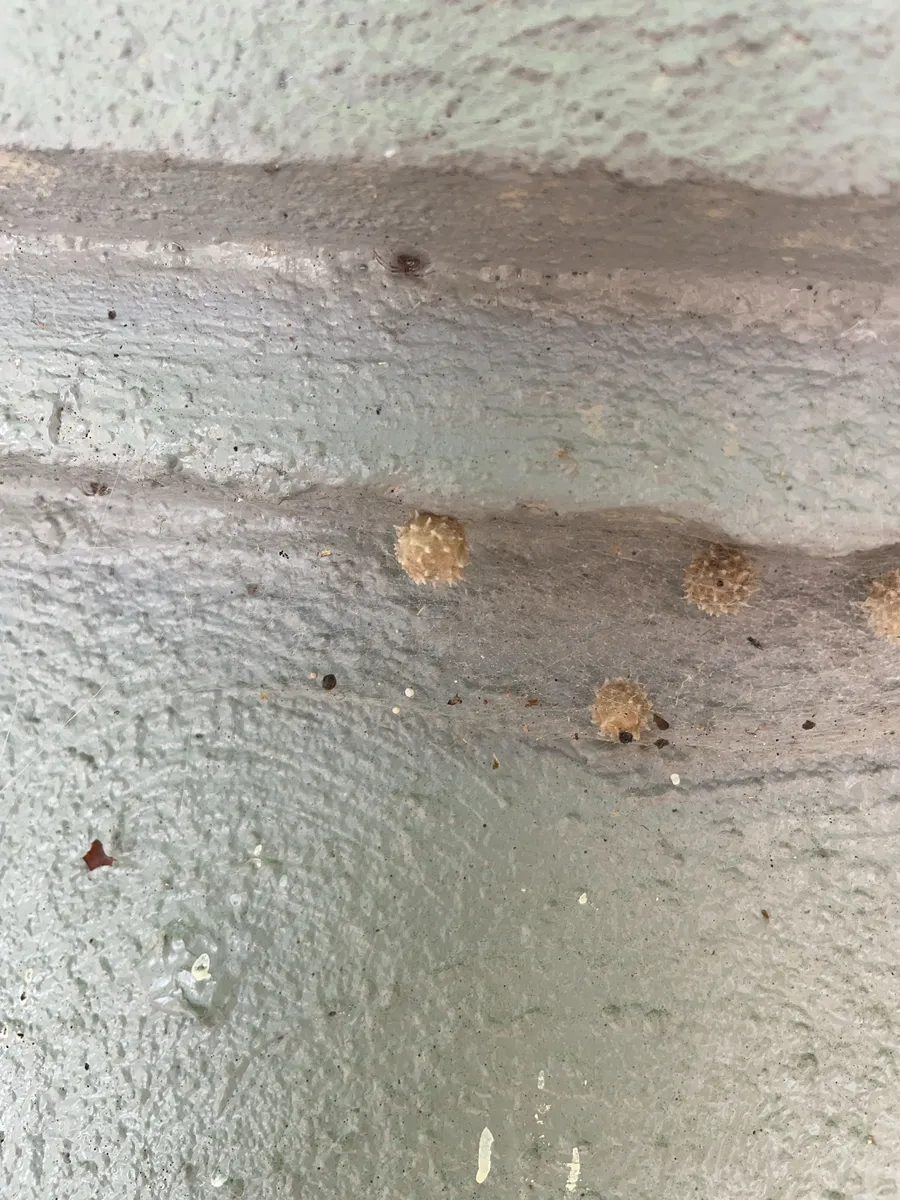
How dangerous are they? Bites are rare. Widows bite defensively, usually when someone presses against one while reaching into a box or putting on a glove. According to Clemson’s widow spider factsheet, a black widow bite causes intense pain at the site within minutes. Within one to three hours it can bring stomach pain, muscle cramps, nausea, fever or chills. Small children are most at risk. Brown widow bites usually cause only a minor reaction.
If you think a black widow has bitten you or your child, get medical care. If you can do it safely, take a photo of the spider to show the doctor. Don’t try to catch it.
Brown recluses: real, but rare here
The brown recluse is the spider South Carolinians worry about most and meet least. It’s a plain tan-to-brown spider with a darker violin-shaped mark on its back, and it lives mainly in the central and south-central United States. South Carolina sits on the far eastern edge of that range.
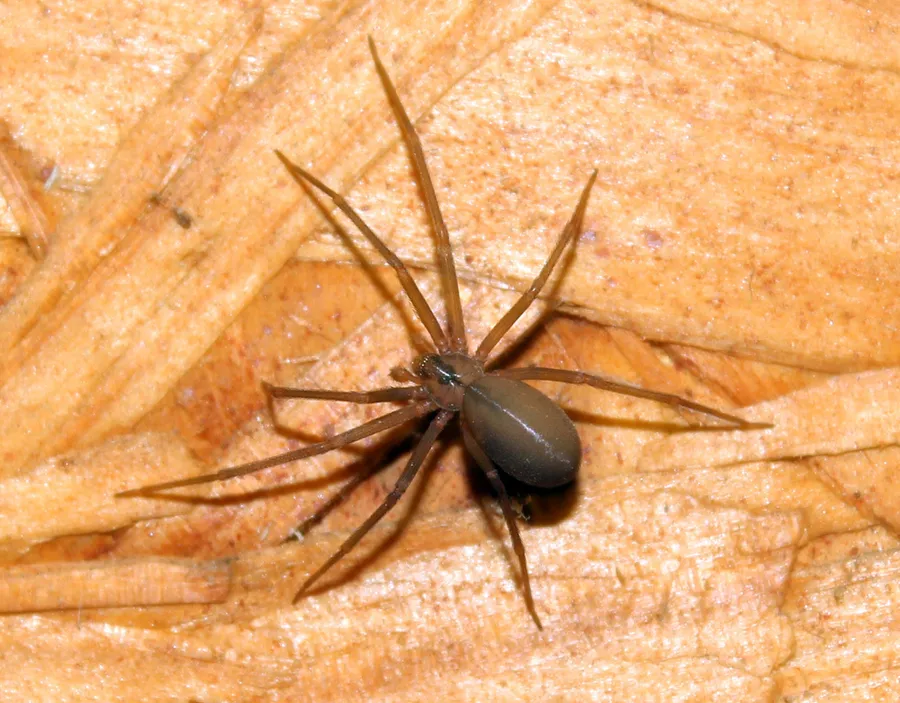
The numbers tell the story. A study published in the Journal of the American Board of Family Medicine found only 44 brown recluse specimens verified in South Carolina from 1953 onward, from six locations. In the same period, South Carolina doctors were diagnosing hundreds of “brown recluse bites” a year: 478 in 1990 and 738 in 2004. A Clemson Extension agent made the same point on SC Public Radio’s Making It Grow: many wounds blamed on recluses turn out to be skin infections such as MRSA.
That doesn’t mean you’ll never see one. Recluses do turn up, often in boxes and furniture moved in from states where they’re common. If you find a spider you think is a recluse, keep it (in a sealed jar, or a clear photo) so it can be identified, and treat any skin wound that is spreading or not healing as a reason to see a doctor, whatever caused it.
Big, scary-looking and harmless
Yellow garden spiders and other big orb-weavers
The big yellow-and-black spiders in the middle of large round webs are orb-weavers. Clemson lists four you’ll see in South Carolina: the yellow garden spider, the banded garden spider, the golden silk orbweaver and the Joro spider.
- Yellow garden spider: yellow with a black center, and a thick zigzag of silk running down the middle of the web. That’s why some people call it the “writing spider.” Adults are most visible July through October.
- Banded garden spider: stripes of yellow, white and black across the abdomen, with banded legs.
- Golden silk orbweaver: a long yellow abdomen, hairy “bottlebrush” tufts on the legs, and a web with a golden shine.
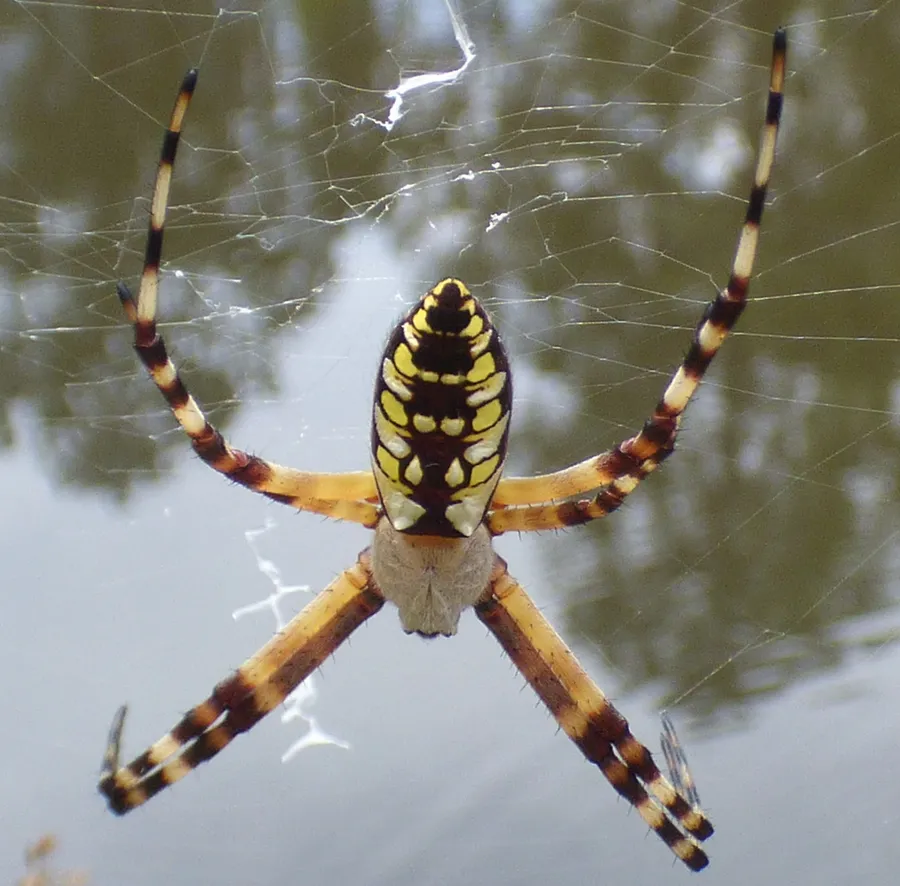
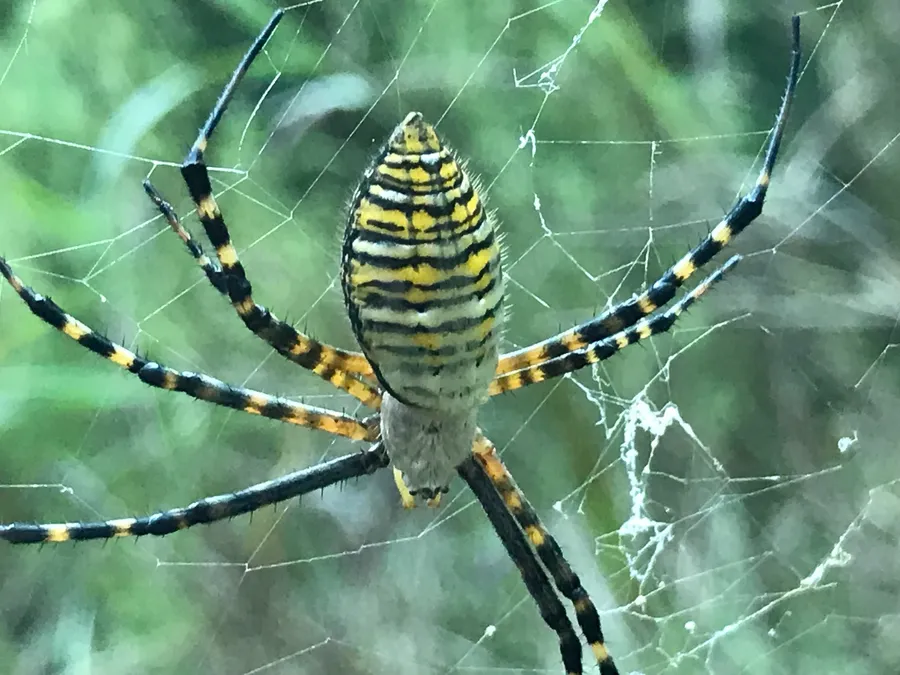
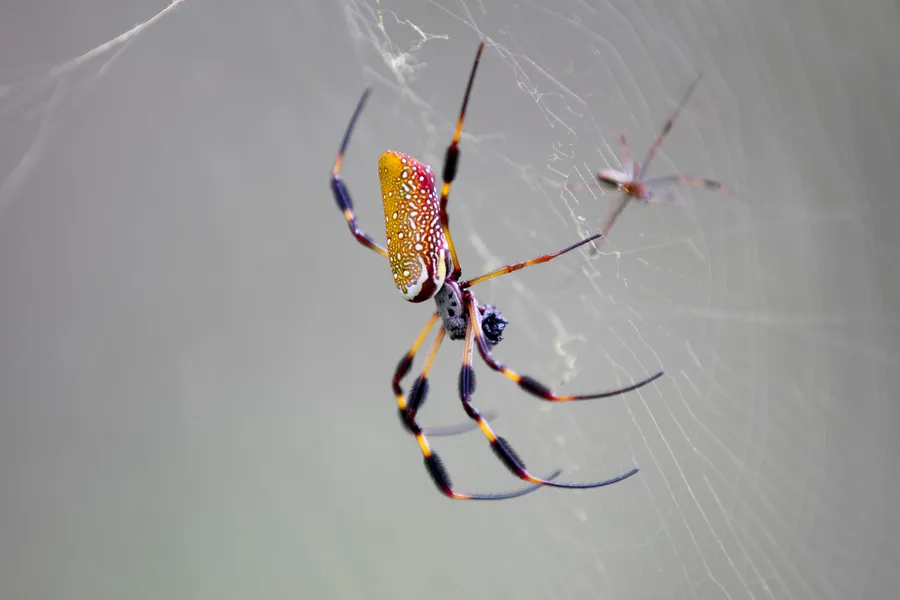
All of them are docile and would rather run than bite. A bite, if it happens, feels like a bee sting.
Joro spiders
Joro spiders are the newest arrival. They’re large orb-weavers from East Asia with a bright yellow abdomen, horizontal silver stripes and a reddish-pink patch on the underside. They were first found in the Upstate, and Clemson Extension’s November 2025 update says they now reach the Piedmont and Sandhills too. Their numbers jump every late fall, and 2025 was an “up” year.
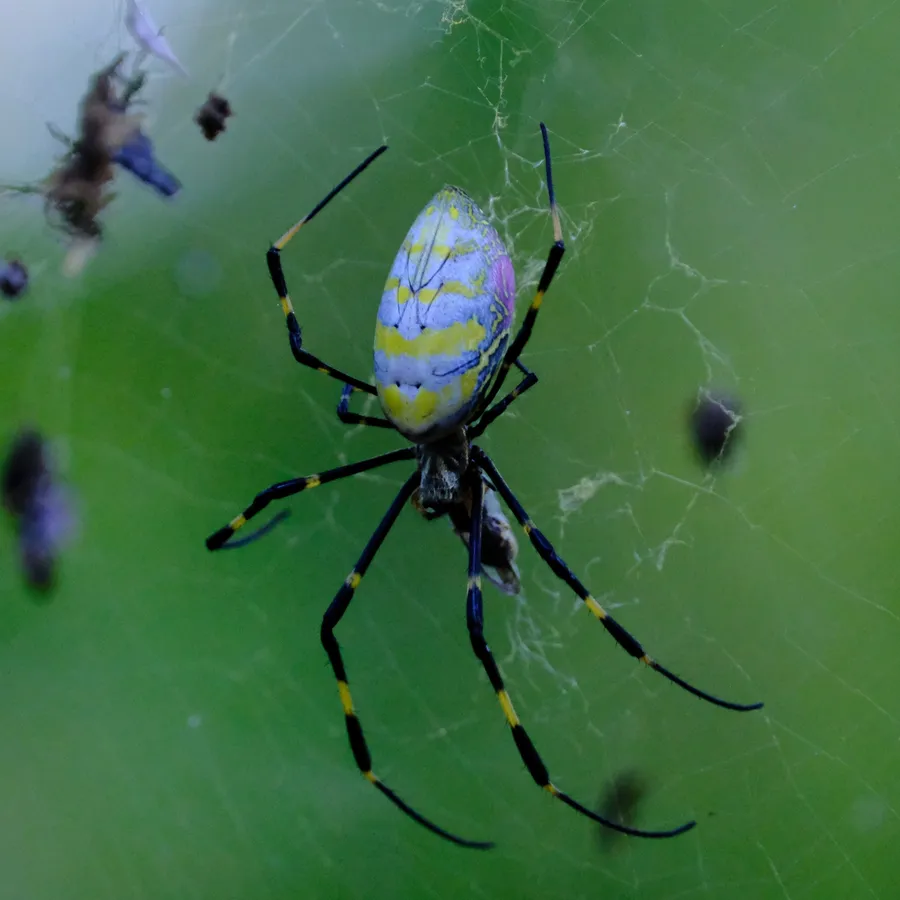
Joros look alarming, especially when their webs span the gap between a tree and a gutter, but Clemson describes them as docile, not medically significant and unlikely to come inside. You can knock the webs down with a broom, or report sightings to iNaturalist or Joro Watch to help researchers track the spread.
Wolf spiders
Wolf spiders are the fast, hairy, brown-and-gray hunters that run across the floor at night. They don’t build webs. They chase their prey. Some reach two inches across, and their eyes shine back if you hit them with a flashlight. The Carolina wolf spider, the largest wolf spider in North America, has been South Carolina’s official state spider since 2000.
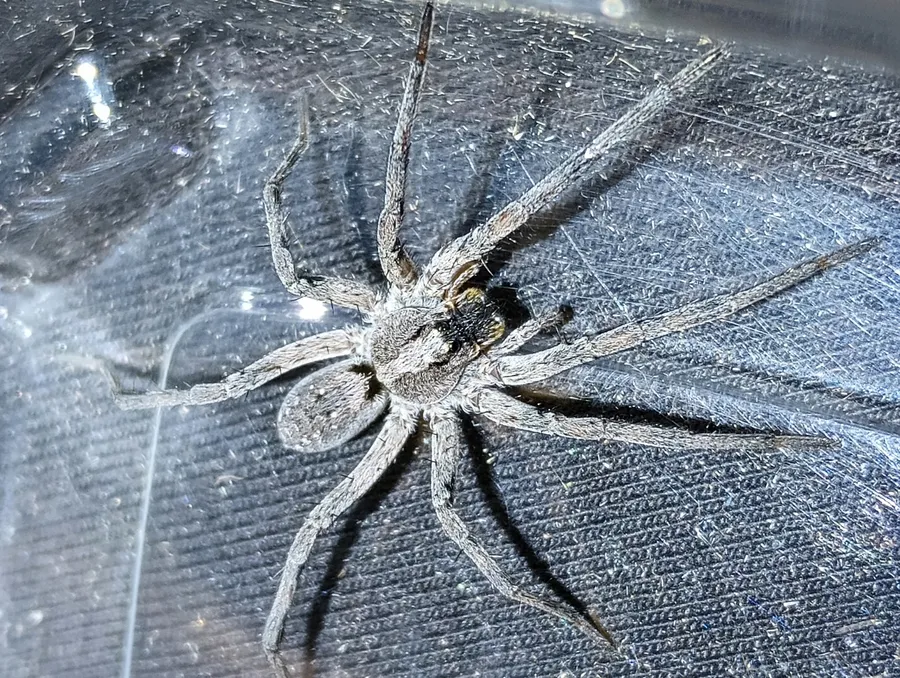
Wolf spiders often wander indoors in the fall and stay for the winter. Clemson’s wolf spider factsheet says they don’t harm people or homes. Catch a stray one in a cup and put it outside, and seal the gaps under doors that let it in.
Cellar spiders, jumping spiders and house spiders
- Cellar spiders are the pale, long-legged spiders in the corners of basements, crawl spaces and garages. They’re harmless. Their problem is the amount of web they leave behind.
- Jumping spiders are small, compact and often fuzzy, with big front eyes. They hunt on windowsills and walls and are harmless.
- Common house spiders build tangled cobwebs in ceiling corners, behind furniture and in closets.
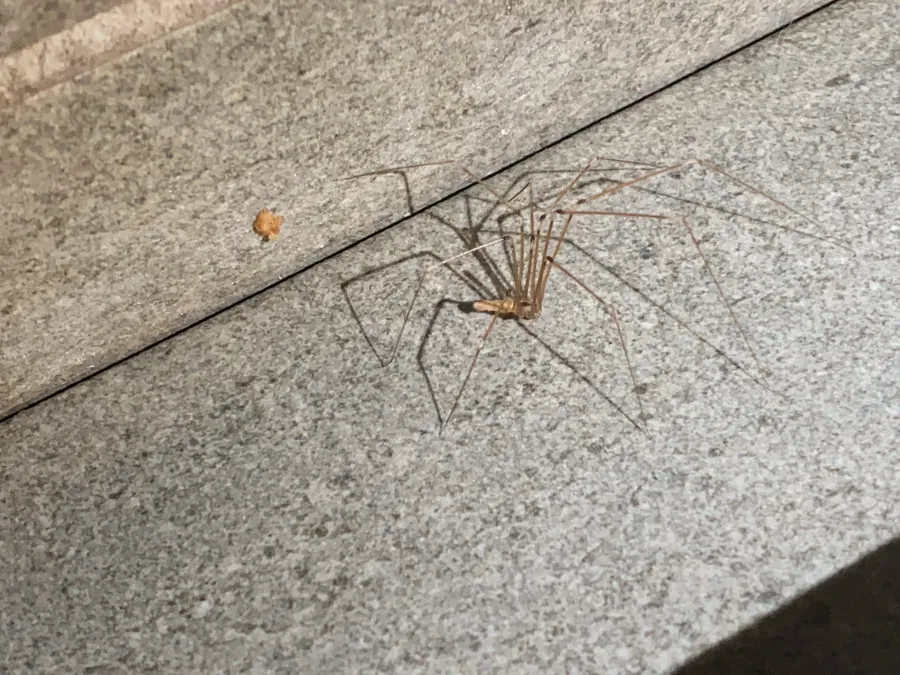
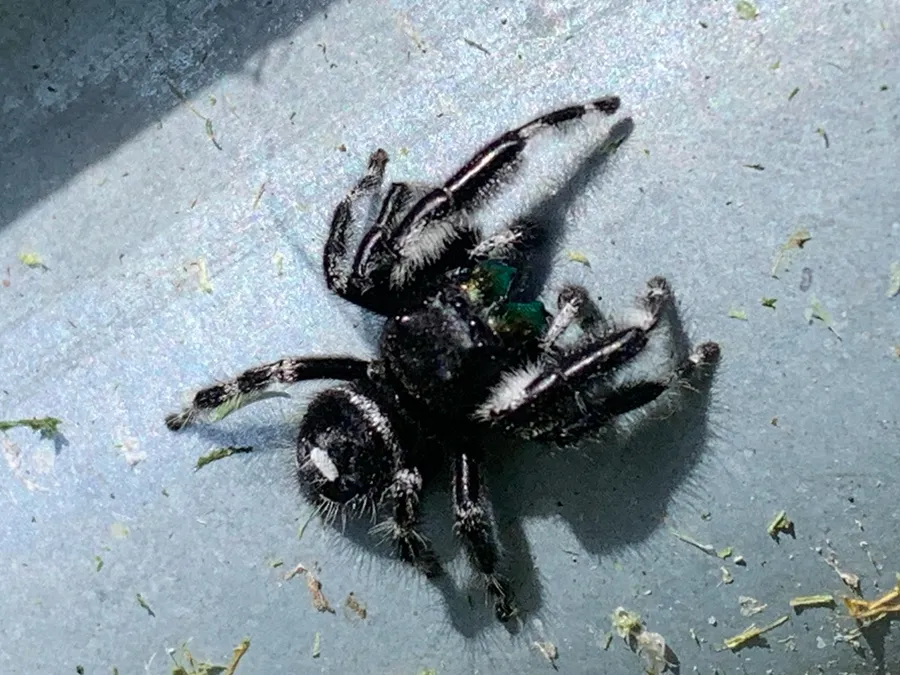
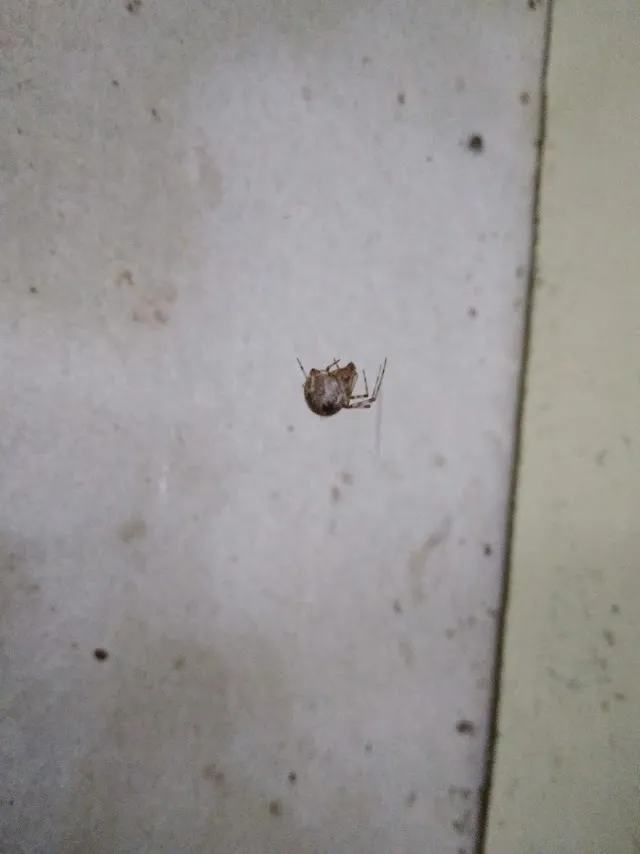
None of these are dangerous. A house full of them usually means a house with plenty of insects for them to eat.
How to tell what you’re looking at
| What you see | Most likely |
|---|---|
| Big round web on the porch or between shrubs, yellow spider in the center | Garden spider, golden silk orbweaver or Joro |
| Shiny black spider low and out of sight: woodpile, flowerpot, crawl space | Black widow (check the underside from a safe distance) |
| Tan or gray spider with spiky round egg sacs under railings or furniture | Brown widow |
| Fast, hairy spider running across the floor, no web | Wolf spider |
| Pale, long-legged spider in a messy web in the basement or crawl space | Cellar spider |
| Small, fuzzy spider that jumps | Jumping spider |
| Plain brown spider with a violin-shaped mark, found in stored boxes | Possible brown recluse. Save it or photograph it for identification |
Keeping spiders out of your home
Fewer insects means fewer spiders, so most prevention is really insect prevention:
- Seal the gaps. Weather-strip doors, repair window screens and seal around pipes and utility lines.
- Switch porch lights to yellow bulbs. They draw fewer of the night-flying insects spiders hunt.
- Clear clutter from garages, basements and closets, and store boxes off the floor and away from walls.
- Move firewood, mulch and dense plantings away from the foundation.
- Wear gloves when reaching into woodpiles, utility boxes, flowerpots and stored boxes. That one habit prevents most widow bites.
- Vacuum webs and egg sacs, then empty the vacuum outside.
When to call a professional
Call when you’re finding widows around the house, when webs keep coming back no matter how often you sweep, or when you’re seeing spiders in the crawl space, garage and living areas at the same time. Those are signs of a steady insect supply and good hiding spots, and spraying the spider you can see won’t change either one.
Mack’s spider control service removes webs and egg sacs, treats the eaves, foundation, doors, windows and crawl space where spiders hide and get in, and treats indoors where they’re active. Because the treatment also cuts down the insects spiders feed on, there’s less reason for them to come back. De-webbing and crawl space treatment are part of every year-round plan, and if spiders come back between visits, so do we, at no extra cost.
We’ve handled spiders in South Carolina homes since 1983, from Greenville and Spartanburg to Columbia and Charleston. Request a free estimate or call 864-235-9611.