
Palmetto Bugs vs. German Cockroaches: Which Roach Is in Your South Carolina Home?

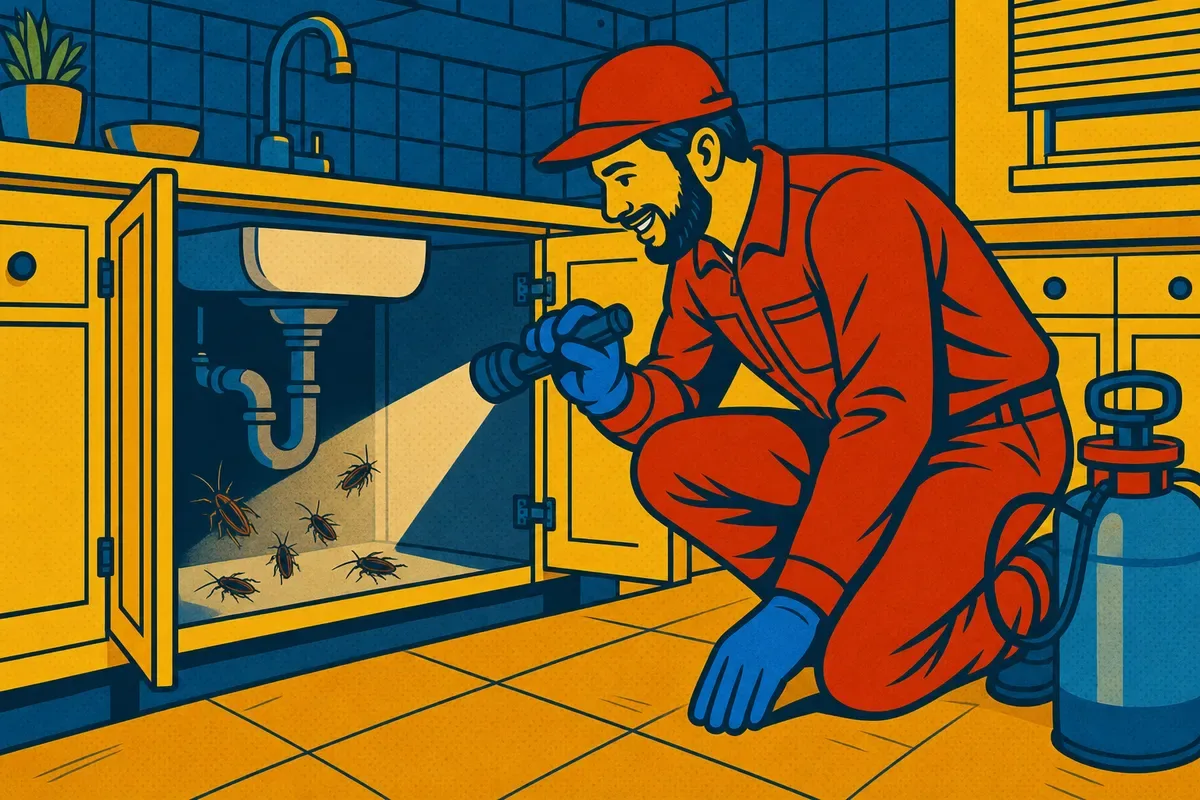
A “palmetto bug” is a cockroach. In South Carolina the name usually means the American cockroach or its cousin the smokybrown cockroach: big, reddish-brown roaches that live outdoors and wander in. The German cockroach is the small, tan one that lives in kitchens and bathrooms and never leaves. They need opposite fixes, so the first job is knowing which one you have.
Palmetto bugs and German cockroaches side by side
| Palmetto bugs (American and smokybrown) | German cockroach | |
|---|---|---|
| Adult size | 1 to 2 inches | ½ to ⅝ inch |
| Color | Reddish-brown (American) or solid dark mahogany (smokybrown) | Pale brown or tan, two dark stripes behind the head |
| Where they live | Outdoors: mulch, leaf litter, gutters, palmettos, drains, crawl spaces | Indoors: kitchens, bathrooms, behind appliances, inside cabinets |
| Do they fly? | Adults may fly on warm evenings | No, even though adults have wings |
| How they get in | Gaps under doors, vents, plumbing openings, the crawl space | Carried in, in grocery bags, boxes and other items brought inside |
| What a sighting means | Usually one wanderer from outside | Usually many more hiding nearby |
| Where the fix happens | Mostly outside | Inside |
Sizes, colors and habits are from Clemson Extension’s cockroach control factsheet.
Palmetto bugs: the big ones from outside
American cockroach
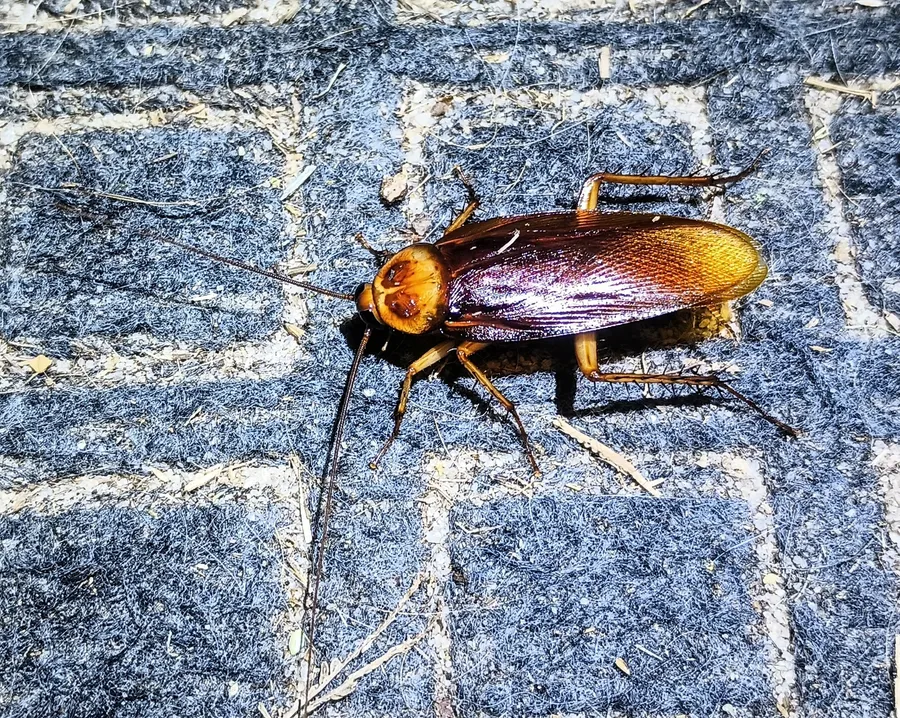
The American cockroach is the biggest roach you’ll see in South Carolina: 1½ to 2 inches long, red-brown, with a pale yellow, halo-like band behind the head. It likes dark, warm, damp places such as sewers, storm drains, storage rooms and garbage areas. Along the coast it also lives in trees. When it does come indoors, it mostly stays on the ground floor and in the basement or crawl space.
Smokybrown cockroach
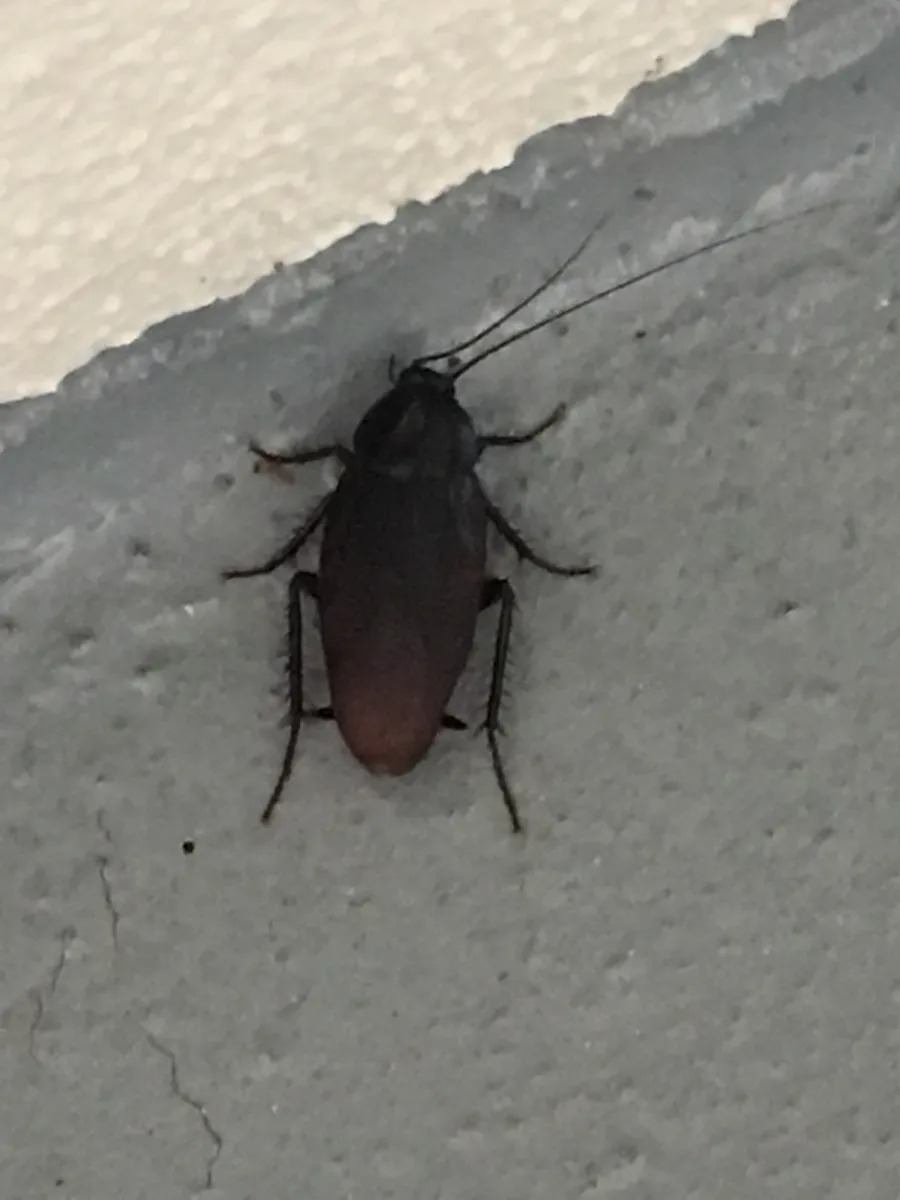
The smokybrown is a little smaller, 1 to 1½ inches, and an even, dark mahogany all over. It lives outdoors in mulch, log piles, thick plantings and roof gutters, and on the coast in palmettos, which is where the nickname comes from. Indoors it can turn up anywhere from the attic to the crawl space. Both species may fly on warm evenings, often toward lights.
Why they come inside
Palmetto bugs are outdoor animals that wander in when the weather pushes them: a hot dry spell, heavy rain or a cold snap. They follow gaps under doors, dryer vents, plumbing openings and the crawl space. One showing up in the kitchen doesn’t mean they’re breeding in the kitchen. It usually means there are plenty living in the mulch and leaf litter around the house, and a gap that lets them in.
The fix is mostly outside. Pull mulch and leaf litter back from the foundation, clean the gutters, fix door sweeps and seal plumbing and utility openings. A professional exterior treatment around the foundation and crawl space stops them before they get in.
German cockroaches: the small ones that live inside
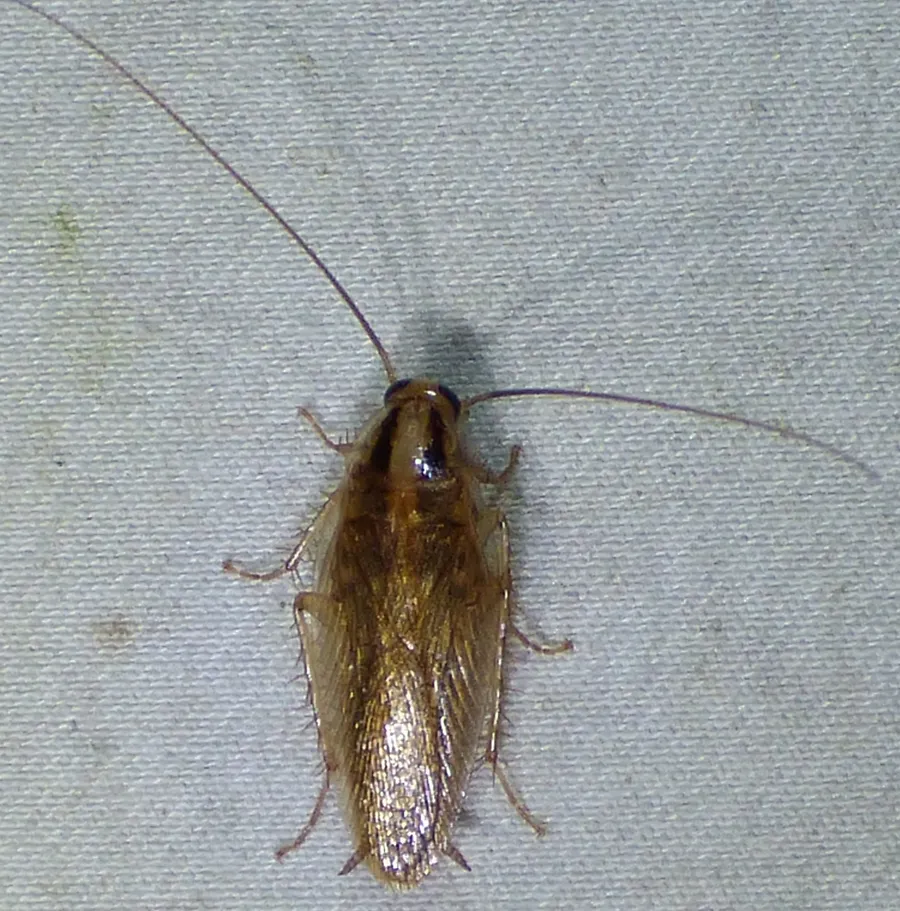
German cockroaches are ½ to ⅝ inch long, pale brown or tan, with two dark parallel stripes behind the head. They live indoors, in kitchens and bathrooms, around sinks and drains, behind refrigerators and stoves, and inside cabinets. Adults have wings but don’t fly.
They’re the roach that turns into an infestation. According to Clemson, the female carries her egg case with her until it’s nearly ready to hatch, and each case holds 30 to 40 eggs that hatch in about two weeks. That’s why a German cockroach problem in an apartment, rental or restaurant can grow fast, and why spraying the roaches you can see rarely ends it.
Signs you have German cockroaches, not palmetto bugs:
- Small roaches of different sizes (the young ones) in the same kitchen or bathroom
- Roaches out during the day, which usually means there are too many to hide
- Droppings like ground pepper or coffee grounds in cabinets, drawers and along baseboards
- A musty, oily smell in the kitchen or pantry
The fix is inside. Baits and targeted treatments go into the cracks and voids where they hide and breed, with follow-up visits to catch the ones that hatch after the first treatment. Store-bought sprays tend to work against baits, because they scatter roaches away from them.
Two more roaches you might find
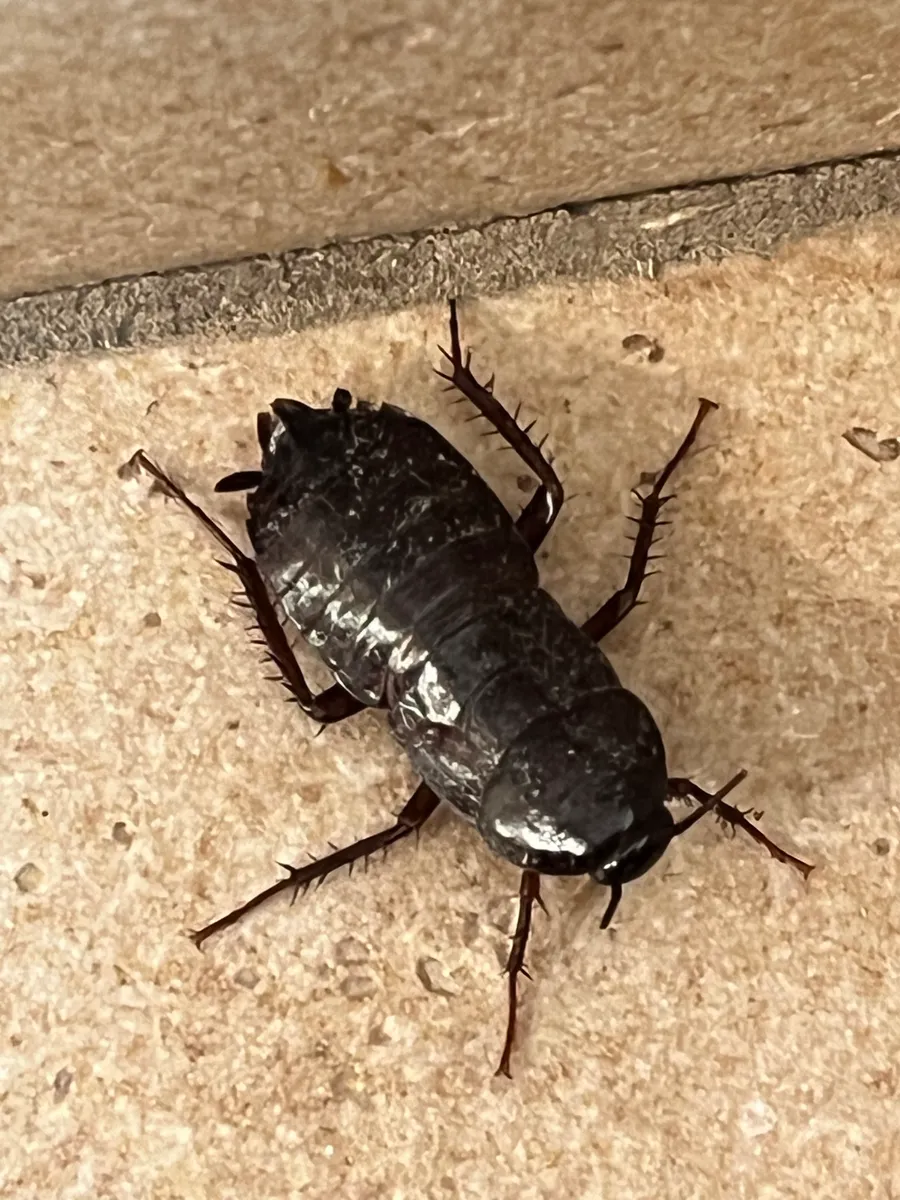
- Oriental cockroach: 1 to 1¼ inches, dark brown to jet black, and neither sex can fly. It lives in water meter boxes, sewer lines, leaf litter, crawl spaces and basements, and rarely goes above the basement level.
- Brownbanded cockroach: small, about ⅝ inch, with two light yellow-brown bands across its back. Unlike the German cockroach, it hides away from kitchens, gluing egg cases under drawers and inside furniture and electronics.
Are roaches a health problem?
They can be. Clemson says the most serious medical problem linked to cockroaches is the allergic reaction many people have to their shed skin and droppings, and the EPA lists cockroach droppings and body parts as asthma triggers. Roaches also travel through drains and garbage and then across kitchen counters, so they can carry germs onto food surfaces. That’s one more reason a German cockroach problem shouldn’t wait.
Keep them out
| Do this | Helps with |
|---|---|
| Pull mulch and leaf litter back from the foundation | Palmetto bugs |
| Clean gutters and clear log piles near the house | Palmetto bugs |
| Replace worn door sweeps and seal plumbing, vent and utility openings | Both |
| Fix dripping faucets and leaky pipes | Both |
| Wipe up crumbs and grease and keep food in sealed containers | German cockroaches |
| Check grocery bags and boxes before they come inside | German cockroaches |
| Skip store-bought sprays if baits are down | German cockroaches |
When to call
Call for palmetto bugs if they’re coming in regularly rather than once in a while. Call for German cockroaches as soon as you’re sure that’s what you have, because they rarely go away on their own.
Mack’s cockroach control service starts by identifying which roach you have, since the two need different treatments. For palmetto bugs that means an exterior barrier, crawl space treatment and pointing out the gaps to seal. For German cockroaches it means baits and targeted treatments indoors, with follow-up visits for new hatchlings. Cockroaches are covered by every year-round plan, and if they come back between visits, so do we, at no cost. We also treat restaurants and apartment communities, with the documentation inspectors ask for.
We’ve been treating roaches in South Carolina since 1983, from Greenville and Columbia to Charleston and Myrtle Beach. Request a free estimate or call 864-235-9611.