
Why Mice Move Into Upstate Homes Every Fall (and How to Keep Them Out)

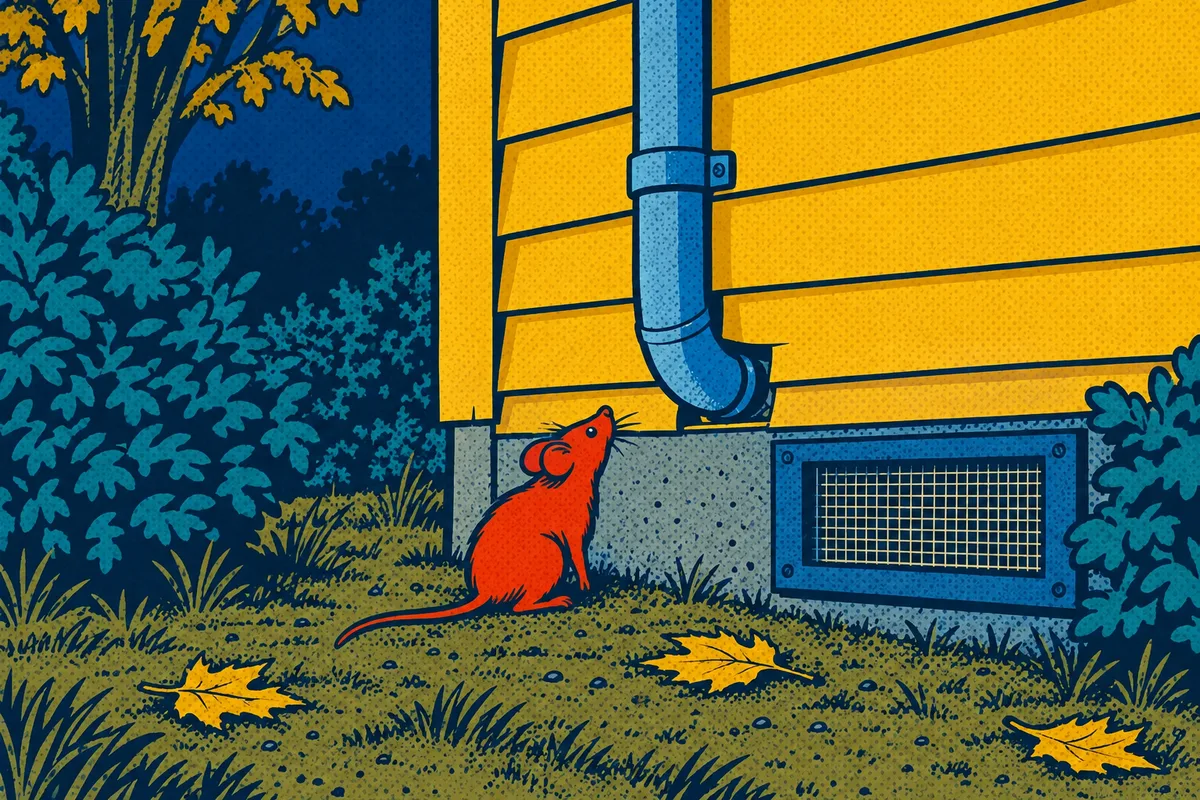
Mice move into Upstate homes in the fall because that’s when the weather starts pushing them toward warmth, shelter and food. The Greenville-Spartanburg area averages its first freeze around November 5, and the weeks before and after are when calls about scratching in the walls and droppings in the pantry pick up. A mouse only needs a gap about ¼ inch wide to get in, so most houses have a way in somewhere.
Why fall is mouse season in the Upstate
| What happens | When | What it means for your house |
|---|---|---|
| Nights start to cool | October | Mice start looking for shelter |
| Average first freeze at Greenville-Spartanburg | Around November 5 | Indoor activity picks up |
| Cold snaps through winter | December to February | Mice that got in stay in and breed |
Freeze date is the National Weather Service Greenville-Spartanburg office’s long-term average.
The Upstate’s growth adds to it. Land cleared for new subdivisions around Simpsonville, Mauldin and Greer pushes mice out of fields and woods and toward the nearest houses. Older neighborhoods have their own problem: crawl spaces, settled foundations and gaps around old plumbing that give mice an easy way in.
Which mice get into Upstate homes
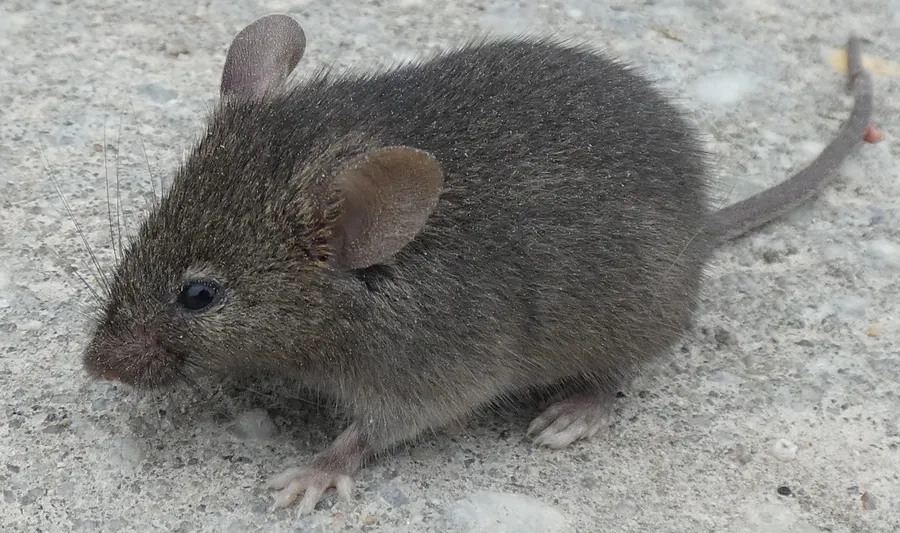

- House mice are small and gray-brown all over, with big ears and a long, nearly hairless tail.
- White-footed mice are brown on top with a bright white belly and feet, and turn up most in homes next to fields and woods.
If you’re seeing bigger droppings, gnawed holes the size of a quarter or heavier thumping in the attic, it may be rats rather than mice.
Signs you have mice
NC State Extension’s guide to structure-invading mice lists what to look for:
| Sign | What it looks like | Where to look |
|---|---|---|
| Droppings | Brown to black, about ¼ inch long, tapered at the ends; one mouse leaves 50 to 75 a day | Pantry shelves, under sinks, drawers, along walls |
| Gnawing | Chewed food packaging, wires and other materials | Pantry, cabinets, behind appliances |
| Nests | Balls of chewed paper, insulation or fabric | Wall voids, stored boxes, the attic and crawl space |
| Sounds | Scratching or scurrying in the walls or ceiling, mostly at night | Walls, ceilings, attic |
| Smell | A musty, urine-like odor | Closed cabinets and storage areas |
How mice get in
According to NC State Extension, gaps of ¼ inch or larger let adult mice in. That’s about the size of a pencil. Around an Upstate home, the usual ways in are:
- Roof returns, where the roofline meets the soffit
- Attic and crawl space vents with torn or missing screens
- Gaps around pipes and utility lines where they go through the wall
- Garage doors, especially the bottom corners where the seal is worn
- Exterior doors without a tight sweep or threshold
How to keep mice out
- Seal gaps of ¼ inch or more. Pack them with copper mesh or 00-grade steel wool, then caulk over it. NC State says to skip expanding foam on its own, because mice chew through it.
- Fix the doors. Use rodent-proof door sweeps or metal thresholds that leave no more than ¼ inch of clearance.
- Screen the vents. Cover attic and crawl space vents with ¼-inch hardware cloth.
- Store food in hard containers, including pet food and birdseed, and don’t leave pet food out overnight.
- Clear clutter from the garage and the base of the walls, where mice hide and nest.
- Don’t count on repellents. NC State says peppermint oil, mothballs and ammonia are not a reliable way to manage mice, and they can make traps and baits less effective.
If mice are already inside
Snap traps set along walls, where mice travel, work fast. Check them daily and keep them where kids and pets can’t reach. NC State recommends leaving rodenticides to professionals, because they’re dangerous to pets, children and wildlife. A mouse that eats poison indoors can also die inside a wall, and the smell lingers.
Cleaning up droppings safely
Mice can spread diseases, including hantavirus and salmonella. The CDC’s rodent cleanup guidance is specific:
| Step | What to do |
|---|---|
| 1 | Open doors and windows for 30 minutes before you start, and stay out of the area |
| 2 | Wear rubber or plastic gloves |
| 3 | Don’t sweep or vacuum droppings or nesting material. It puts germs in the air |
| 4 | Spray droppings until very wet with a disinfectant or a fresh bleach solution (1½ cups of bleach per gallon of water) and let it soak 5 minutes |
| 5 | Wipe up with paper towels and throw them out in a covered trash can |
| 6 | Disinfect the area, then wash your gloved hands, take off the gloves and wash your hands again |
When to call
Call if you’re finding fresh droppings in more than one room, hearing activity in the walls night after night, or the mice keep coming back after you trap them. That usually means there’s an entry point you haven’t found.
Mack’s rodent control service starts with a full inspection of the attic, crawl space, garage, kitchen and outside of the home. We trap the mice already inside, seal the entry points we find (roof returns, vents, utility lines, plumbing openings and garage doors), and place locked, tamper-resistant bait stations outside to stop new ones. Then we come back to check traps and stations until the activity stops. Rodent prevention and exterior bait stations are part of every year-round plan.
Greenville has been home base since 1983, and we serve the whole Upstate, from Greenville and Greer to Spartanburg and Anderson. Request a free estimate or call 864-235-9611.